SFS for Build-to-Rent Developments
Repetitive Mid-Rise Infill & Gateway 2 Evidence
At a glance
- BTR schemes are repetitive and tall, so the SFS package is bought on rate consistency and envelope-closure certainty, not unit price.
- Most BTR blocks are Higher-Risk Buildings under the Building Safety Act, which makes the Gateway 2 evidence chain part of the scope.
- We delivered the SFS infill at the former Fulham Gas Depot for Erith at a 120-minute fire rating — double the common UK specification.
- Repetition is the advantage: the same detail, floor after floor, by a crew that has already built it.
Build-to-rent is the most repetitive mid-rise work in UK construction, and repetition is what an SFS package is best at. The same infill bay, the same deflection head, the same cavity barrier, on floor after floor — once the first level is right, the rest is rate. What a BTR developer is actually buying is the date the envelope closes, because that date releases every internal trade behind it.
By Boyan Stanilov, Managing Director, BAS Frames · Last reviewed August 2026
What BTR buys that other sectors do not
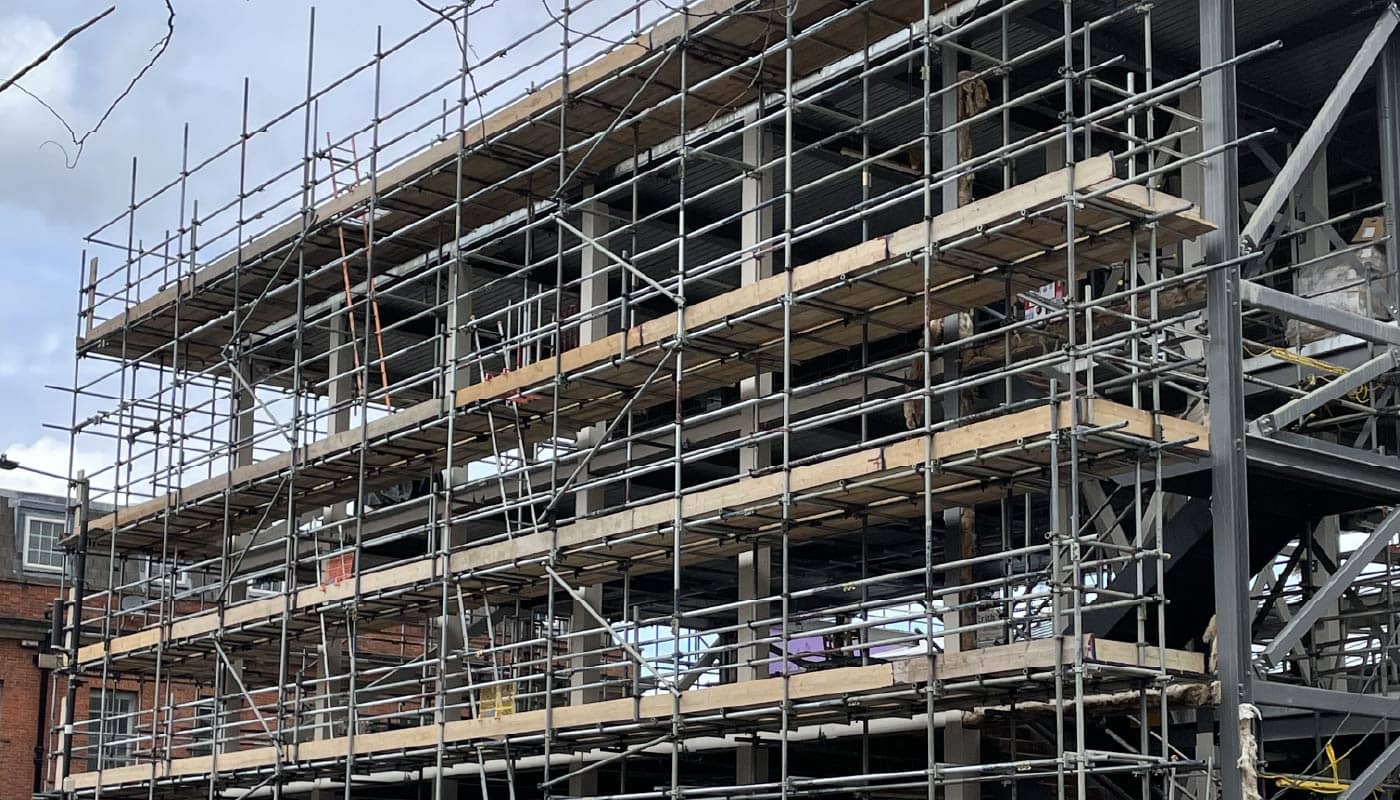
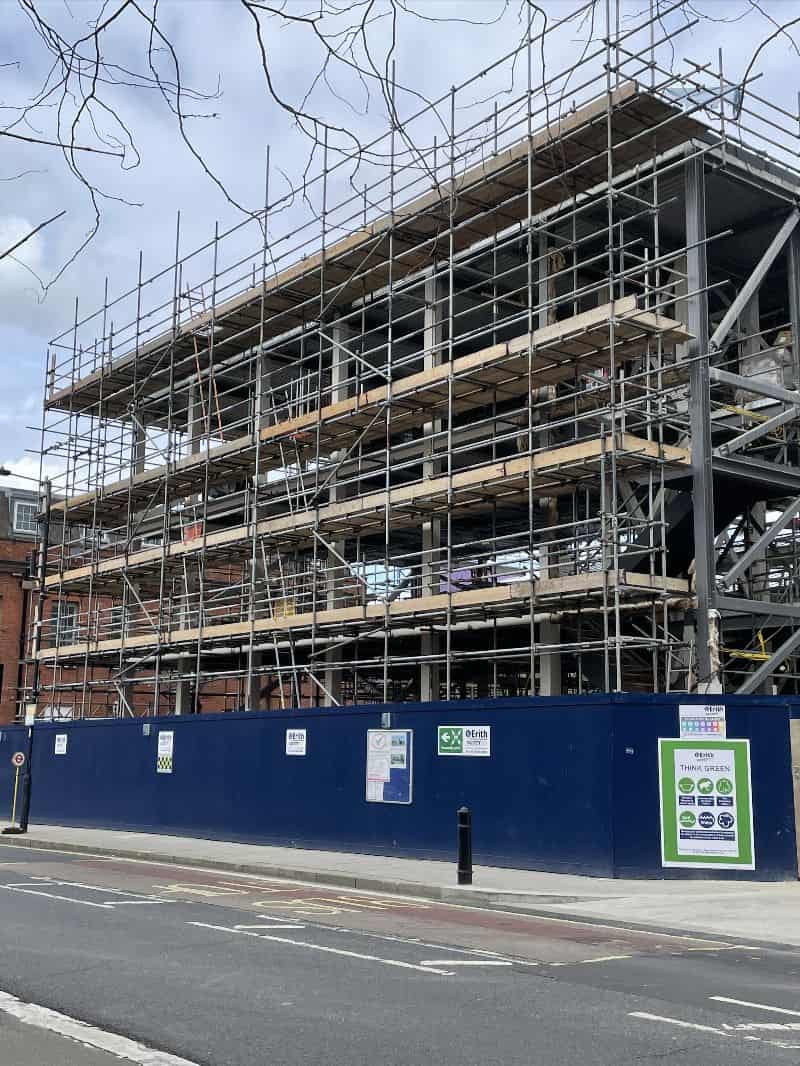
On a one-off commercial building, the SFS package is a line item. On a BTR block it is a rate that repeats twenty times, so a small error in the first bay is multiplied by the whole scheme, and a small efficiency is too. That changes what matters at tender: not the headline square-metre price, but whether the subcontractor can hold the rate once scaffold moves, whether the design is settled far enough ahead to order accurately, and whether the crew is directly employed or brokered in each week.
It also changes the risk. Envelope closure is on the critical path of every BTR programme. A fortnight lost on infill is a fortnight lost on drylining, M&E second fix and handover, and on a rental asset that fortnight is rent.
The Building Safety Act is part of the scope
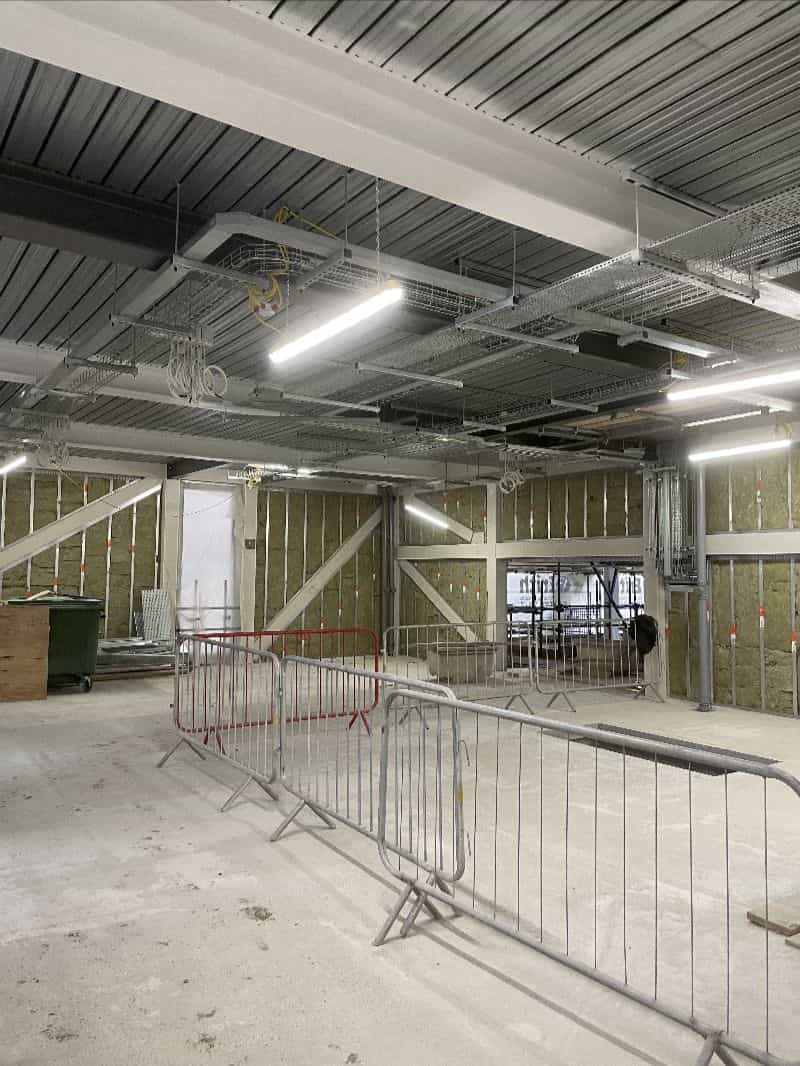
Most BTR blocks are over 18 metres and residential, which makes them Higher-Risk Buildings. Compartmentation, cavity barriers and firestopping have to be installed as tested systems and evidenced in the golden thread at Gateway 2 and Gateway 3. That is not paperwork bolted on at the end — it is decided when the wall build-up is specified.
Every package we deliver includes the evidence chain as standard: structural calculations sealed by a chartered engineer, fire performance data with test certification for each wall type, U-value calculations, supplier traceability, method statements and a construction control plan. See passive fire protection for the encasement, cavity barrier and firestopping side, and fire-rated drylining for the wall itself.
Fulham Gas Depot — 120 minutes, verified
The former gas depot on Imperial Road in Fulham is being redeveloped into a multi-storey BTR community. We delivered the SFS infill package for Erith, specified to a 120-minute fire rating — twice what is commonly specified on comparable schemes.
Every structural steel member was encased in 60mm ETEX Promat. Our operatives were trained by the manufacturer before installation began, and the completed encasement was inspected and signed off by an ETEX representative. The full detail is on the Fulham case study.
Working on a constrained inner-London site
BTR density is highest exactly where sites are tightest. At Hathaway House in Elmfield Way W9 — a fourteen-storey mixed-use tower with a four-storey office alongside, for HG Construction — there was no site storage whatsoever. Material was delivered just-in-time onto canteen decks and installed from there, because there was nowhere else to put it.
That is a logistics problem before it is a steel problem, and it is the reason we programme deliveries against the installation sequence rather than against a bulk order. On a site with no laydown area there is no buffer to absorb a late load.
Adding storeys to a building that is already let
Airspace development is a BTR route in its own right: rather than buying land, add units above a block you already own. Light steel makes it viable, because the added dead load is a fraction of masonry and the existing foundations often need no reinforcement.
At Albany Court in Trenmar Gardens NW10 we added six flats above occupied flats, with a three-level tiered roof and bespoke steel dormers, in eight weeks and with no rejected deliveries. At Cross Keys in Edmonton N9 we added eight flats to an occupied six-storey block, placing seven-metre joists by hand where craneage could not reach. See steel frame extensions.
How we price and programme a BTR package
From Stage 3 drawings we return a fixed, itemised scope with the exclusions written down, so the numbers you compare are like for like. Standard mobilisation is two to three weeks from order; material lead time is two to three weeks for standard sections and five to seven for fire-engineered or bespoke profiles. Where a package has been added late or a previous subcontractor has come off, we can usually mobilise in seven to ten days using pre-ordered stock.
The full scope is set out on the SFS package page, and the infill system itself on SFS infill walls.
Why BAS Frames on a BTR scheme
Directly employed install crews rather than labour-broked gangs, supplier relationships spanning Metsec, Hadley and FrameFast, SMAS Worksafe and CHAS accreditation, and a Gateway 2 evidence pack delivered as standard rather than as a variation. Send us your drawings for a costed package.
Related: All sectors | Main contractors | SFS package | BTR playbook
BTR work we have delivered
- Fulham Gas Depot, Imperial Road SW6 — SFS infill to a 120-minute fire rating for Erith, with 60mm ETEX Promat encasement and manufacturer sign-off.
- Hathaway House, Elmfield Way W9 — fourteen-storey mixed-use tower plus a four-storey office for HG Construction, delivered just-in-time with no site storage.
- 56 Chatfield Road, Wandsworth SW11 — four storeys added to an existing riverside building for Landmark Estates in ten weeks.
Frequently asked questions
Why is SFS used on build-to-rent schemes?
BTR blocks are repetitive and usually mid to high rise, which suits a light steel infill frame: it is fast, dry, dimensionally accurate and light enough not to load the primary structure. The repetition means the same detail is built many times, so the rate improves once the first floor is set out correctly.
Are build-to-rent blocks Higher-Risk Buildings?
Most are. A building of at least 18 metres or seven storeys containing dwellings falls within HRB scope under the Building Safety Act 2022, and the large majority of BTR schemes exceed that. The practical consequence is that compartmentation and firestopping must be installed as tested systems and evidenced at Gateway 2 and 3.
How quickly can you close the envelope on a BTR block?
It depends on floor area, access and whether the design is settled, so we programme it per scheme rather than quoting a universal rate. As a reference point, at The Lea in Denham four operatives installed over 2,000m2 of SFS and external boarding in six weeks working from scissor lifts.
Do you provide the Gateway 2 evidence pack?
Yes, as standard rather than as an extra. It covers structural calculations, fire performance data with test certification for each wall type, U-value calculations, acoustic data where applicable, supplier traceability, method statements and a construction control plan.
Can you add storeys to an occupied BTR block?
Yes. We have added six flats above occupied flats at Albany Court and eight flats to an occupied six-storey block at Cross Keys. Light steel keeps the added load low enough that the existing structure often needs no reinforcement, and the work is sequenced around residents.
Related: residential developers for unit-led schemes, and the full SFS package for what is included. All our services.
GET IN TOUCH
In order to get in touch, complete the contact form, or see our details below.
Address: BAS CONSTRUCTIONS LTD
35 Redcliffe Close,
London,
SW5 9HY
Opening times: Mon to Fri – 08:00 – 17:00 Saturday and Sunday and Bank Holidays Closed.
Call: 07463 631303
office@basframes.co.uk
BTR & MID-RISE PROJECTS.
Higher-risk residential buildings delivered with the fire-rating evidence to match.