BAS Frames

News

: SFS Cost Per m² UK 2026: Developer's Pricing Guide | BAS Frames

SFS Cost Per m² UK: 2026 Pricing Guide for Developers

A 2026 UK pricing guide for developers and QSs procuring SFS — supply, install and through-wall £/m² ranges, what drives the spread, and how to read tender returns so the comparison is genuinely like-for-like.

A wide-angle industrial photograph taken on a high-rise commercial construction site in London during an active fit-out. A long corridor of metal stud framework stretches deep into the distance, showing the skeleton of future offices. Workers wearing high-visibility orange vests and hard hats are visible in the background, using green laser levels to align the tracks. High-contrast natural light from large floor-to-ceiling windows illuminates the scene, highlighting the dust and the galvanized steel frames against a panoramic view of the London skyline, including The Shard. The concrete floor is scattered with construction materials, and the focus is sharp across the active workers and detailed construction.

What Is a Metal Stud Partition?

A specification and procurement guide for architects, designers, and main contractors — covering metal stud partition system types, stud gauges, height limits, acoustic and fire performance, and the decisions that determine whether a partition delivers on its specification.

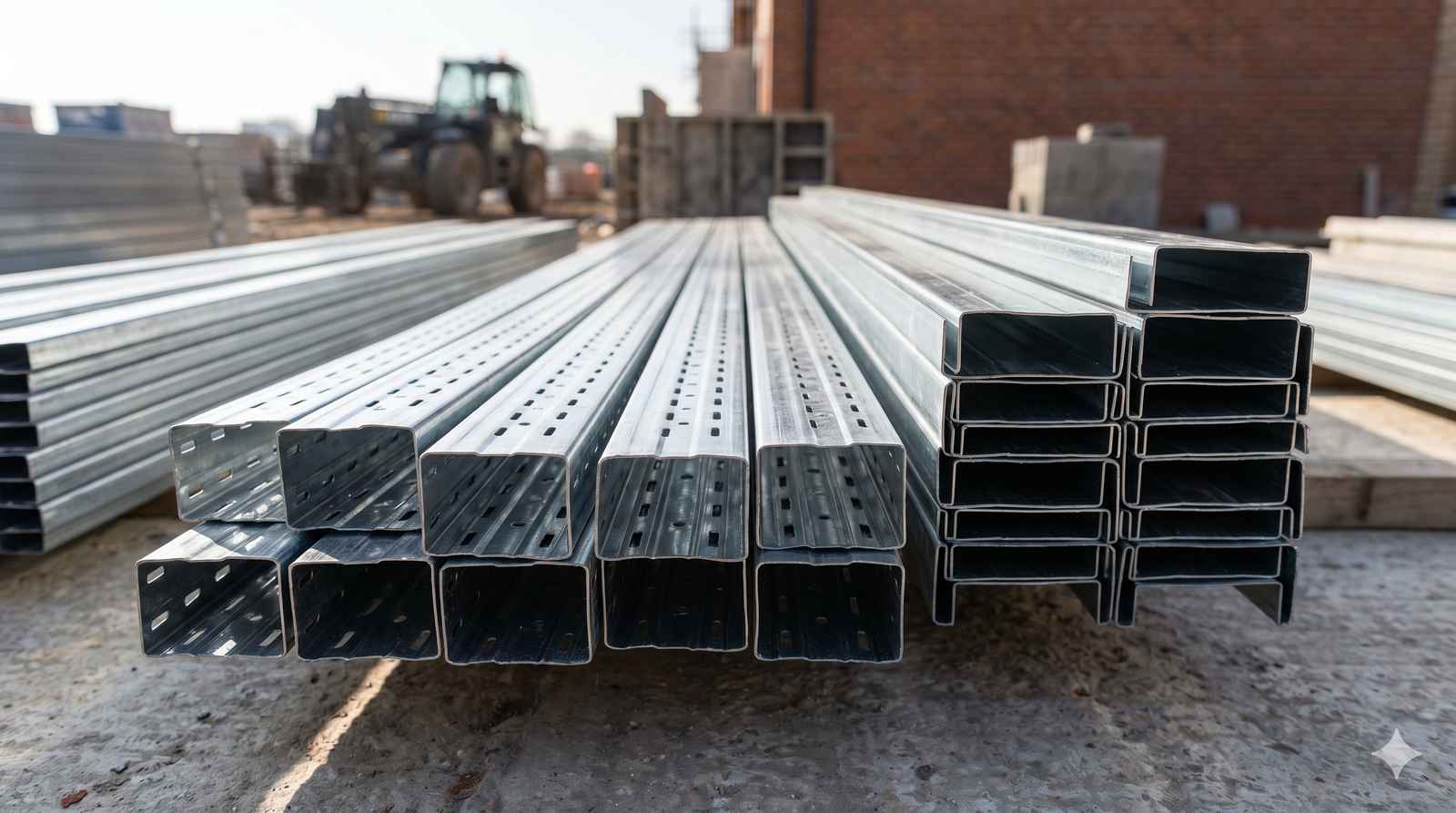
Close-up of pre-punched service holes in light gauge steel studs for fast electrical and plumbing installation.

Metal Stud Partitions vs. Timber

For small domestic extensions, timber remains a viable option. However, for multi-story developments and rooftop extensions, the benefits of metal stud partitioning are undeniable. It offers a faster, safer, and more precise foundation for the high-quality finishes your clients expect.

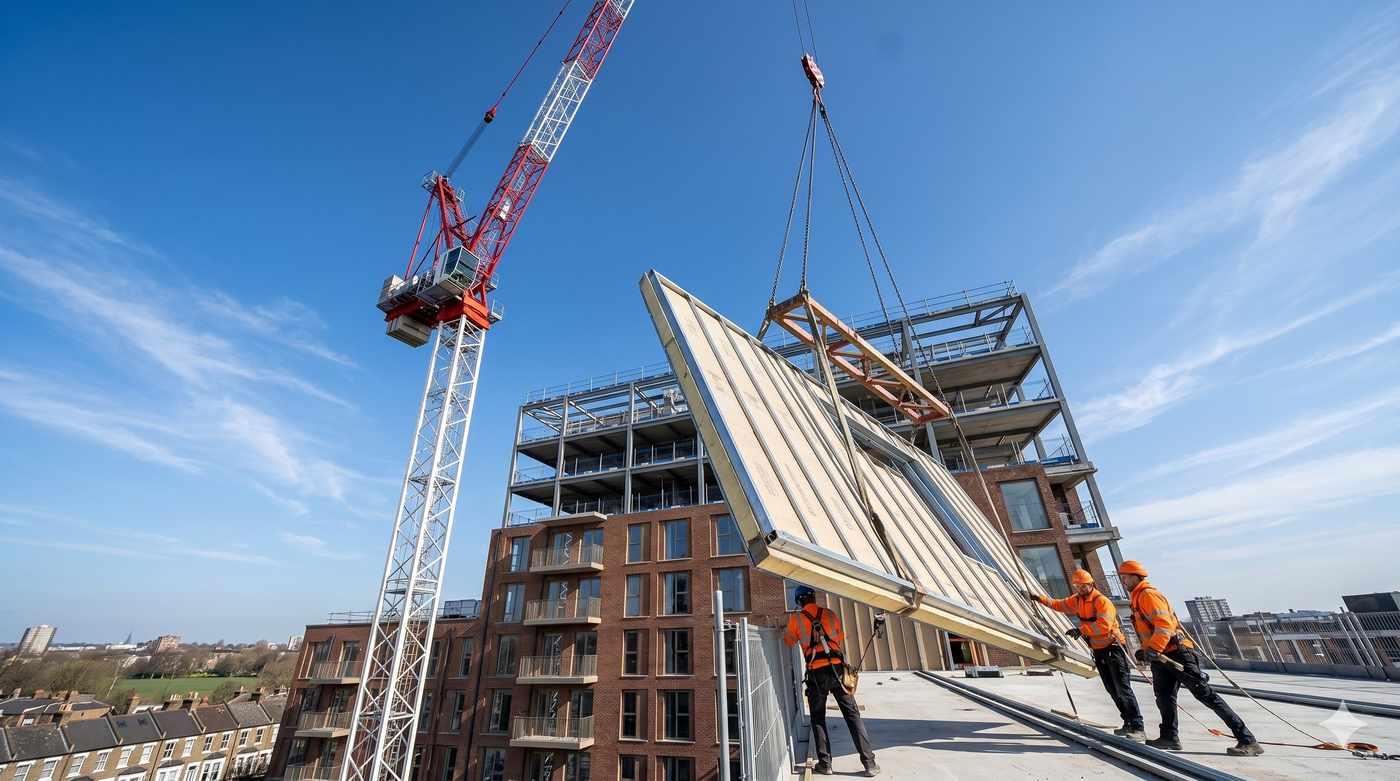
A wide-angle industrial photograph captures a multi-story high-rise construction site in London during the facade closure phase. A dynamic team of four construction workers, wearing orange high-visibility vests and hard hats, is actively hoisting a large, prefabricated SFS (Steel Frame System) C-stud panel into place on an open concrete floor slab. In the background, a substantial hot-rolled structural steel frame dominates the scene, with many levels already enclosed by completed, grey-sheathed SFS infill walls. High-contrast natural daylight from a bright sky casts long shadows on the concrete, silhouetting the foreground workers and the intricate metal framing against a naturally blurred London skyline, including The Shard. A large mobile crane jib is partially visible above, supporting the lifting process. The image emphasizes the human scale and the technical assembly of modern, non-load-bearing envelope systems.

SFS Infill Walls

A technical guide for developers, architects, and main contractors — covering what SFS infill systems are, how they connect to primary structures, the key design and deflection considerations, and what distinguishes a well-specified infill package from one that creates problems on site.

A wide-angle industrial documentary photograph taken on a London commercial construction site during an active fit-out. A team of five drylining operatives in high-visibility orange vests and hard hats are installing mineral wool insulation (yellow batts) and a silver vapour control layer into a freshly completed galvanized steel SFS (Steel Frame System) frame, closing the building envelope between the beam flanges and columns. Immediately adjacent, on the same floor plate, is a fully finished section of the SFS wall. In the foreground, a large stack of pink fire-rated plasterboard sheets waits for internal lining. Natural daylight streams through massive floor-to-ceiling windows, casting high-contrast shadows and highlighting the detailed textures of the insulation, metal framing, and dusty concrete floor against a naturally blurred London skyline, which includes The Shard. Construction tools and material offcuts are scattered across the floor.

SFS and Drylining

SFS forms the structure. Drylining finishes it. On commercial projects, the interface between the two is where coordination succeeds or fails. This guide explains how the systems connect technically, where the scope boundaries lie, and why a combined package appointment consistently outperforms a divided one.

A wide-angle photograph taken on a dusty commercial construction site in London shows four workers in high-visibility orange vests and hard hats installing large sheets of pink fire-resistant plasterboard onto a curved metal track and stud framework that encircles a central lift core. The building is a high-rise office under fit-out, with vast, multi-story floor-to-ceiling windows in the background offering a clear view of the blurred London skyline. One worker uses a screw gun to attach a panel, while others handle material from stacks on the floor. Steel studs are visible, and construction equipment is scattered. The overall image captures the complex process of fire-stop installation and interior construction in a modern high-rise.

Fire-Rated Drylining: Specification Guide

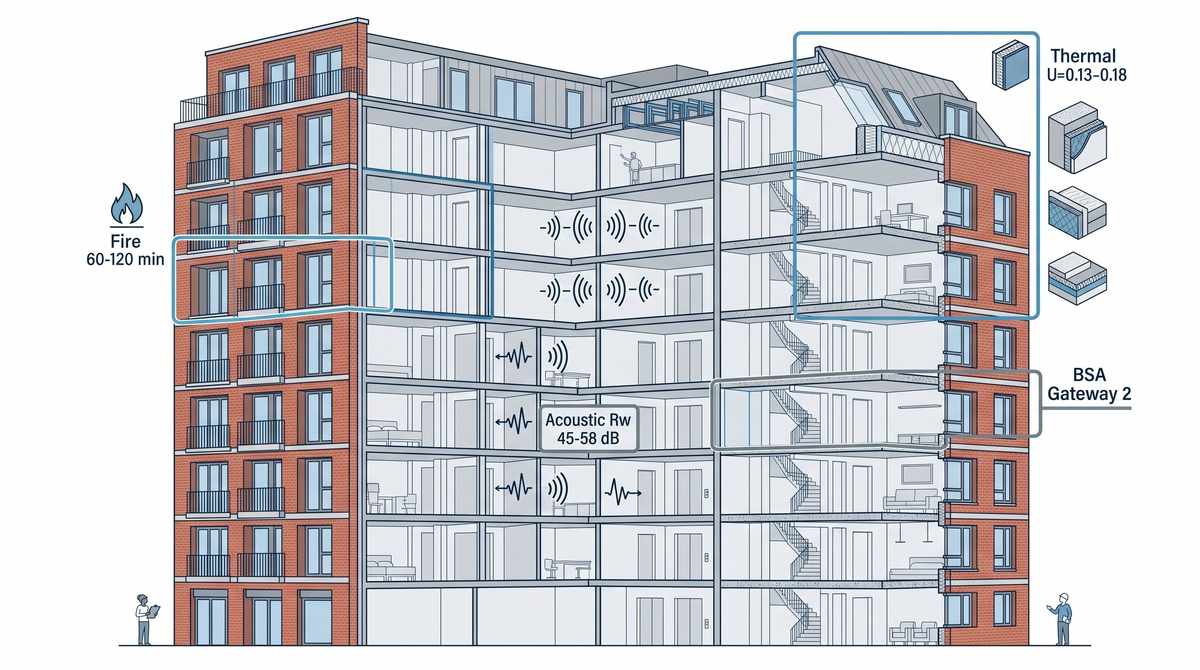
A practical reference for architects, main contractors, and QS professionals specifying fire-rated drylining systems in commercial construction — covering Approved Document B, performance ratings, system types, and the specification decisions that determine whether a build passes inspection.

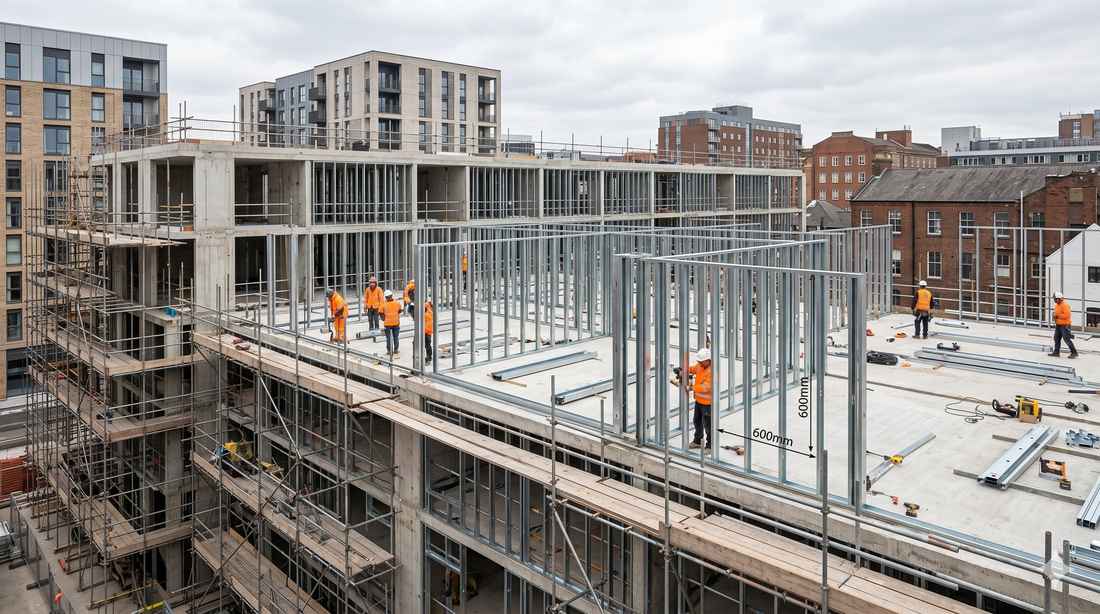
Steel Framed Systems (SFS) installation on a London construction site with steel frame structure and worker assembling framework near Canary Wharf skyline

What Is Included in an SFS Package

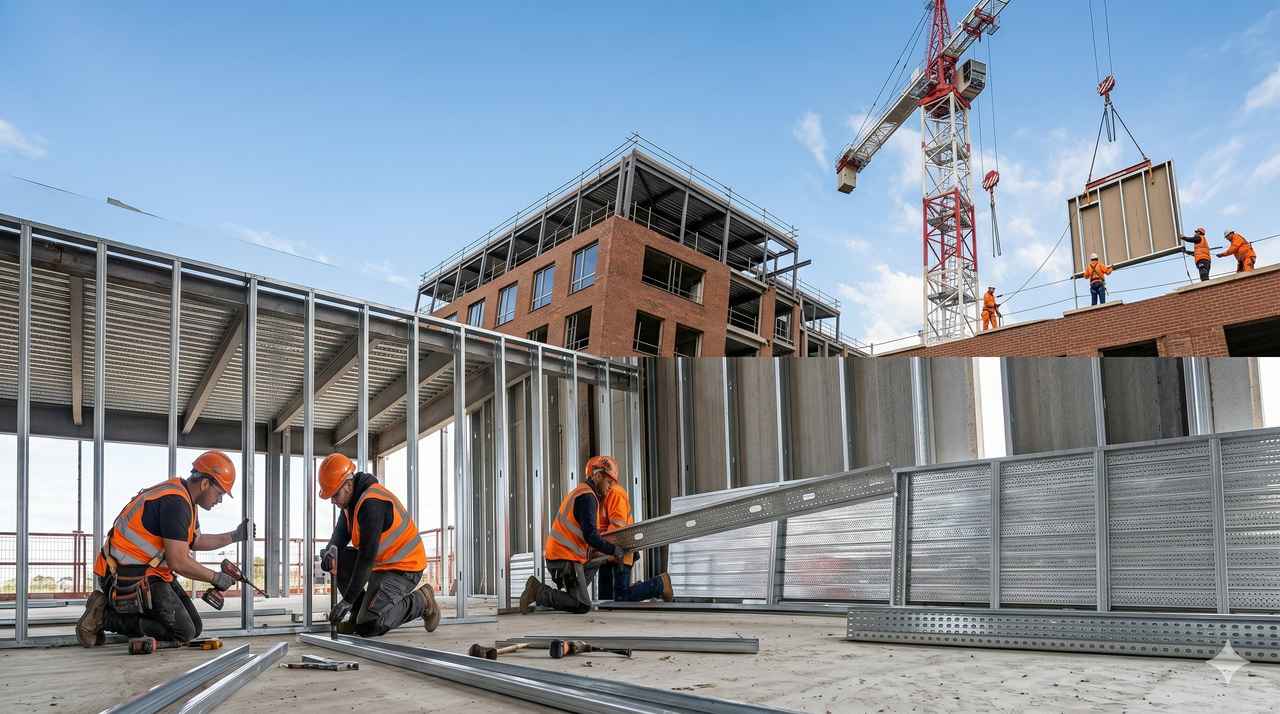
An SFS package typically includes design, supply, installation, and project coordination. For developers, it offers a more efficient way to manage quality, cost control, and programme delivery.

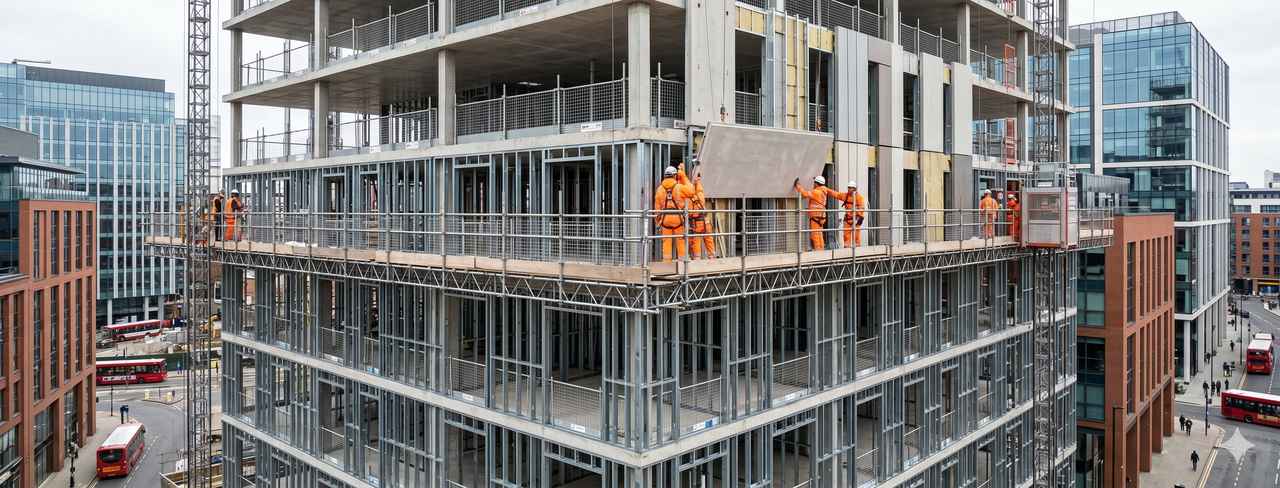
Steel Framed Systems (SFS) installation on a London construction site with steel frame structure and worker assembling framework against city skyline

Steel Framed Systems (SFS) in London

Steel Framed Systems (SFS) are rapidly becoming the preferred construction method across London, offering a fast, efficient, and reliable solution for modern developments. Used in both residential and commercial projects, SFS provides a lightweight, high-performance alternative to traditional building techniques.

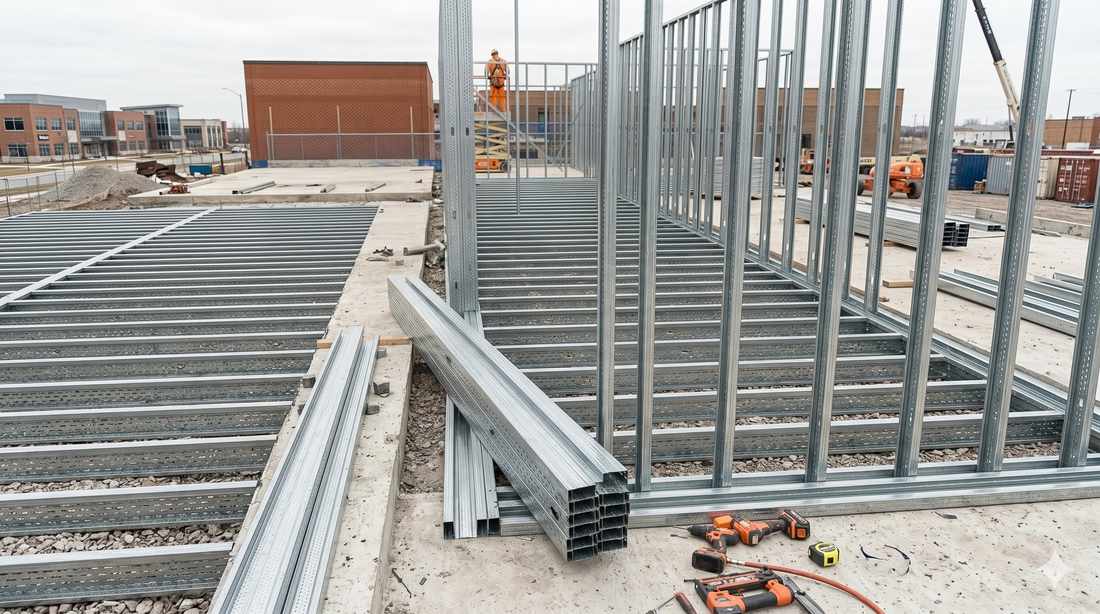
Close-up of SFS C-stud and U-track galvanized steel components showing precision fit for structural walling.

Flexible Steel Frame Designs in Practice

As the construction industry pivots toward faster, more sustainable building methods, Steel Framing Systems (SFS) have emerged as the premier solution for modern building envelopes. Unlike traditional masonry, SFS utilizes high-strength, cold-rolled galvanized steel to create a lightweight yet incredibly durable structural framework.

Menu