Passive Fire Protection
Encasement, Cavity Barriers & Firestopping
At a glance
- Passive fire protection contains fire and protects escape routes with no power or action needed.
- We install fire-rated encasements, firestopping, cavity barriers and compartmentation to 30–120 minutes.
- Tested systems, installed and documented to Approved Document B and the Building Safety Act.
By Boyan Stanilov, Managing Director, BAS Frames · Last reviewed October 2026
Passive fire protection is the fire safety built into the building itself. Unlike sprinklers or alarms, it needs no power and no trigger — it simply holds fire and smoke back for a defined period, protecting escape routes and buying time. As a specialist in steel framing and drylining, BAS Frames installs the passive fire protection that goes hand-in-hand with those systems: fire-rated linings and encasement, firestopping, cavity barriers and compartmentation.
What passive fire protection is
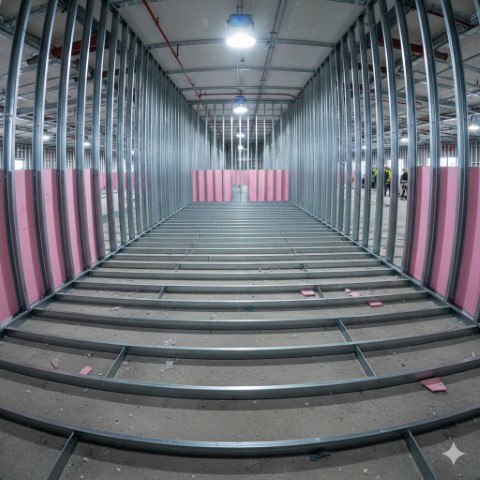
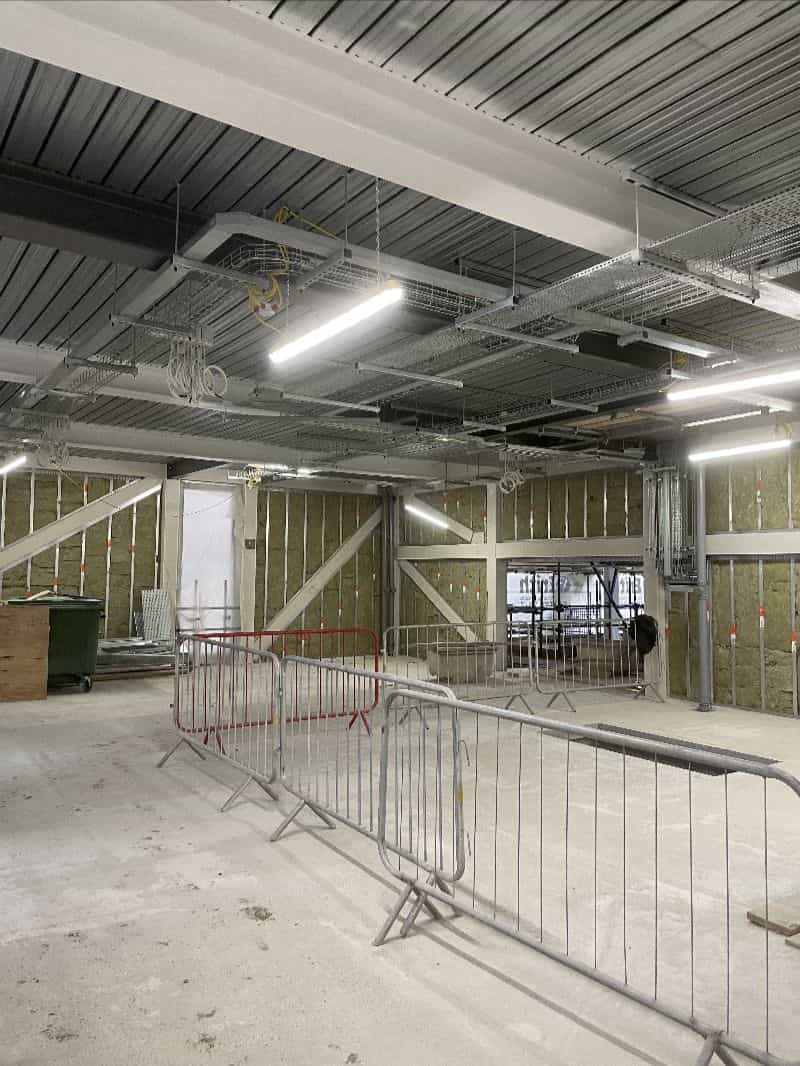
PFP works by compartmentation — dividing a building into fire-resisting cells so a fire starting in one cannot spread. It relies on fire-rated walls, floors and ceilings, on protecting the structure so it doesn’t collapse in a fire, and on sealing every gap and penetration through a fire-resisting element. Get the walls right but leave the penetrations open and the compartment fails, which is why detailing matters as much as the boards.
Systems we install
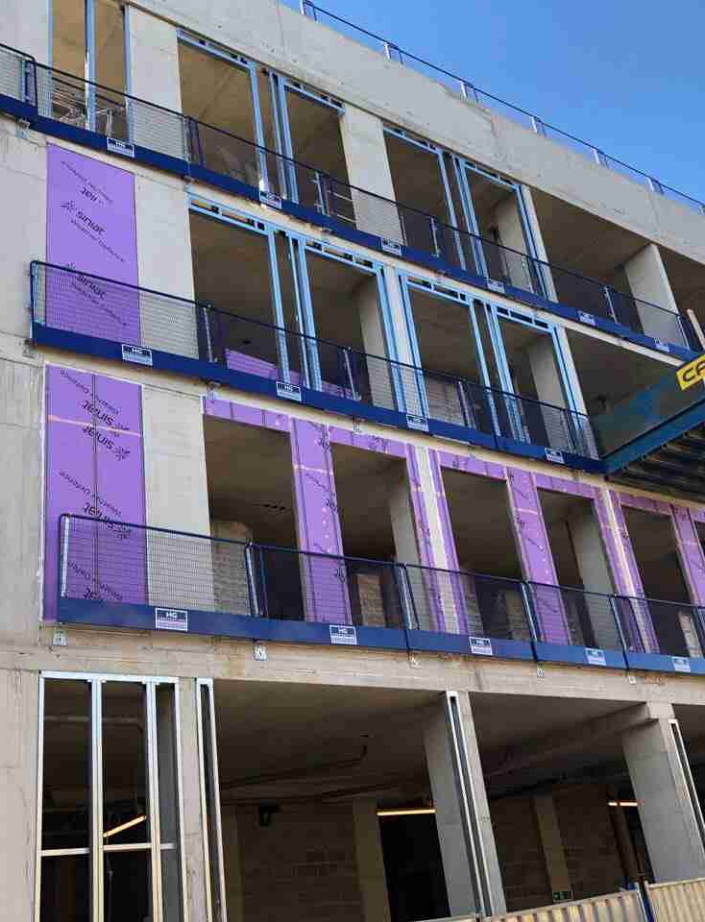
- Fire-rated boarding and encasement — protecting structural steel and forming fire-resisting walls, shafts and ceilings with certified board systems.
- Firestopping — sealing service penetrations (cables, pipes, ducts) through fire-resisting walls and floors with tested collars, sleeves, batts and sealants.
- Cavity barriers — closing concealed cavities in facades and partitions so fire can’t bypass a compartment line through the void.
- Compartmentation — fire-rated partitions and shaft walls around cores, stairs and risers protecting means of escape.
Fire ratings and standards
We install tested systems giving 30, 60, 90 or 120 minutes of fire resistance to Approved Document B, tested to the relevant BS EN standards (for example BS EN 1366 for service penetrations and BS EN 1364/1365 for non-loadbearing and loadbearing elements). A rating belongs to the whole tested build-up — board, layers, fixings and detailing — so we install strictly to the product certification and never mix incompatible components.
Higher-Risk Buildings and the golden thread
Since Grenfell, passive fire protection is under intense scrutiny. For buildings over 18 m — Higher-Risk Buildings under the Building Safety Act 2022 — the compartmentation, cavity barriers and firestopping must be installed to tested systems and fully documented as part of the golden thread, evidenced at Gateway 2 and 3. We provide the product certification, installation records and photographs that the Building Safety Regulator and the Accountable Person expect.
Accreditations
BAS Frames is SMAS Worksafe accredited and a CHAS Accredited Contractor — recognised UK health, safety and compliance certifications for construction subcontractors. Product-specific fire-system installer certifications are confirmed per system at tender stage.
Where passive fire protection is required
PFP is needed wherever the fire strategy relies on compartmentation or structural protection: around escape stairs and corridors, between flats and hotel or student rooms, around lift shafts and service risers, at every floor level in a facade cavity, and on structural steel that would otherwise fail early in a fire. In practice that means almost every multi-occupancy and commercial building — and the requirement intensifies with height and occupancy.
Why BAS Frames?
Because passive fire protection isn’t a bolt-on — it’s inseparable from the drylining and framing we already install. Delivering the fire-rated linings, firestopping and cavity barriers alongside the fire-rated drylining and SFS package keeps compartmentation continuous and accountable under one team. Contact us to discuss your fire strategy.
Passive fire protection we have delivered
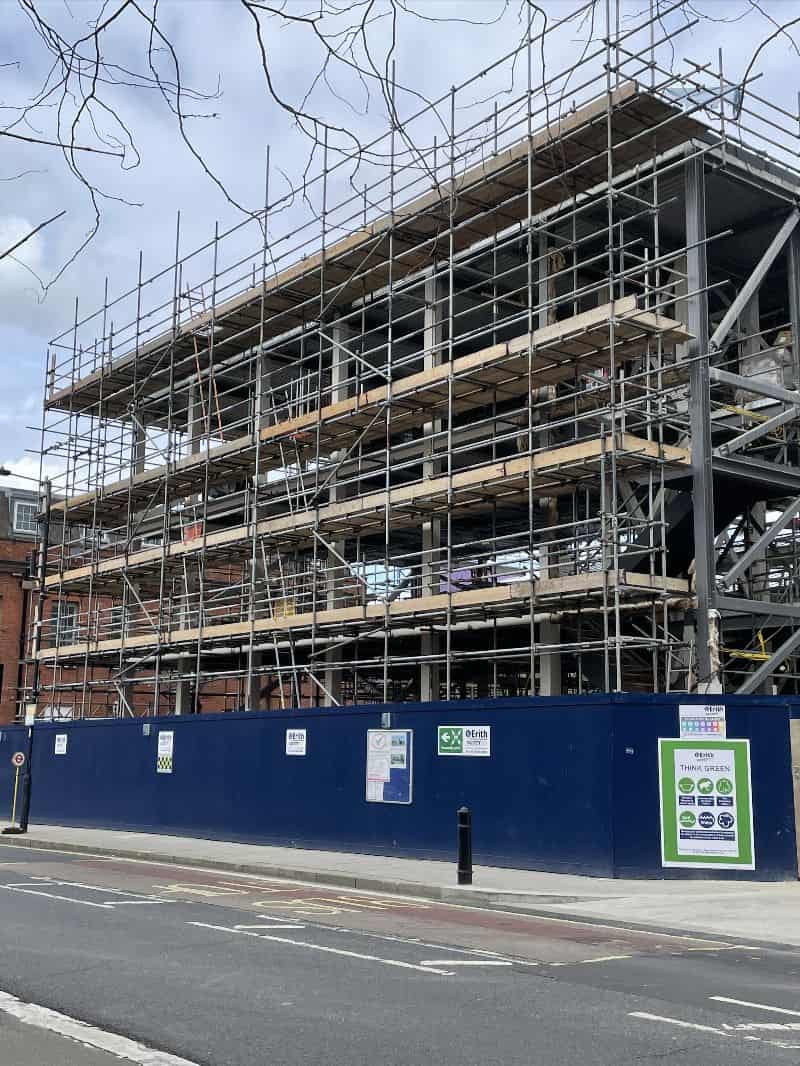
- Fulham Gas Depot, London SW6 — 60mm ETEX Promat encasement to every structural steel member, specified through a manufacturer fire report and inspected on completion by the manufacturer.
Frequently asked questions
What is passive fire protection?
Passive fire protection (PFP) is built into the structure to contain fire and protect escape routes without any action or power — fire-rated boards and encasement, firestopping, cavity barriers and compartmentation that hold back fire and smoke for a defined period.
What fire ratings can you achieve?
We install tested systems providing 30, 60, 90 or 120 minutes of fire resistance to Approved Document B, depending on the element and specification, using certified board, encasement and firestopping products.
Do you install firestopping and cavity barriers?
Yes — service penetration seals, linear-gap seals, and cavity barriers within the facade and drylining. These are where compartmentation most often fails, so we install and document them as tested systems.
Do you provide compliance documentation for over-18 m buildings?
Yes. For Higher-Risk Buildings we provide product certification, installation records and the golden-thread evidence the Building Safety Act 2022 requires at Gateway 2 and 3.
Are you third-party accredited for fire protection?
BAS Frames holds SMAS Worksafe and CHAS accreditation. Fire-rated systems are installed to the manufacturer’s tested specification, with product-specific installer certification confirmed per system.
Why is firestopping so important?
Because most compartmentation failures happen at gaps, not walls — an unsealed cable or pipe penetration lets fire and smoke bypass an otherwise sound fire wall. Correctly installed, tested firestopping keeps the compartment line continuous.
Does passive fire protection replace sprinklers?
No — they’re complementary. Passive protection (compartmentation, encasement, firestopping) contains fire structurally with no power needed, while active systems (sprinklers, alarms) detect and suppress. A fire strategy usually relies on both.
How do you document passive fire protection?
We record each installed system with its product certification, location and installation photographs, compiled into the handover pack and the golden thread for Higher-Risk Buildings.
What buildings need passive fire protection?
Almost all multi-occupancy and commercial buildings — flats, hotels, student accommodation, offices and healthcare — rely on compartmentation, so passive fire protection is required by the fire strategy, with the demands rising as height and occupancy increase.
Related: Fire-rated drylining | Shaft wall systems | Commercial drylining
Related: fire-rated drylining covers the wall itself — board build-ups and linings to 30, 60, 90 or 120 minutes. See also how we achieved a 120-minute rating at the Fulham Gas Depot and our structural engineering page. All our services.
GET IN TOUCH
In order to get in touch, complete the contact form, or see our details below.
Address: BAS CONSTRUCTIONS LTD
35 Redcliffe Close,
London,
SW5 9HY
Opening times: Mon to Fri – 08:00 – 17:00 Saturday and Sunday and Bank Holidays Closed.
Call: 07463 631303
office@basframes.co.uk
RELATED ARTICLES.
Technical guides on fire ratings, tested systems and the documentation required on higher-risk buildings.
SFS Fire Resistance Ratings: 60, 90 & 120 Minute Systems Explained
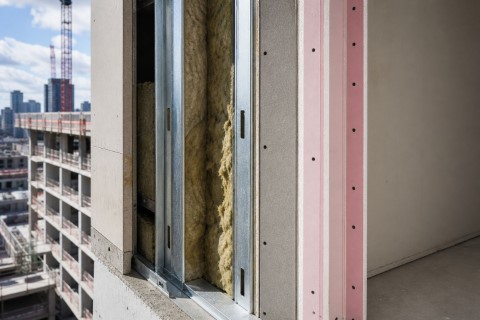
Fire-rated SFS specification in the post-Grenfell era — what EI 60, EI 90 and EI 120 ratings actually mean, typical tested through-wall build-ups, and the five common mistakes that invalidate Gateway 2 compliance. FULL PROJECT
Fire-Rated Drylining: Specification Guide
A practical reference for architects, main contractors, and QS professionals specifying fire-rated drylining systems in commercial construction — covering Approved Document B, performance ratings, system types, and the specification decisions that determine whether a build passes inspection. FULL PROJECT