Key takeaways
- Drylining fixes plasterboard to a metal-stud frame (or direct to masonry) to form internal walls and ceilings without wet plaster — faster, cleaner and more controllable on site.
- A skilled team boards roughly 80–120 m² per day, and drylining runs in parallel with M&E first-fix, which is why it is the default finish on time-critical UK programmes.
- Board choice drives performance: standard, moisture-resistant, acoustic and fire-rated boards deliver fire ratings up to 120 minutes and acoustic ratings above 55 dB Rw.
- On Higher-Risk Buildings (18 m+) under the Building Safety Act 2022, drylining must be backed by tested-system evidence retained in the golden thread.
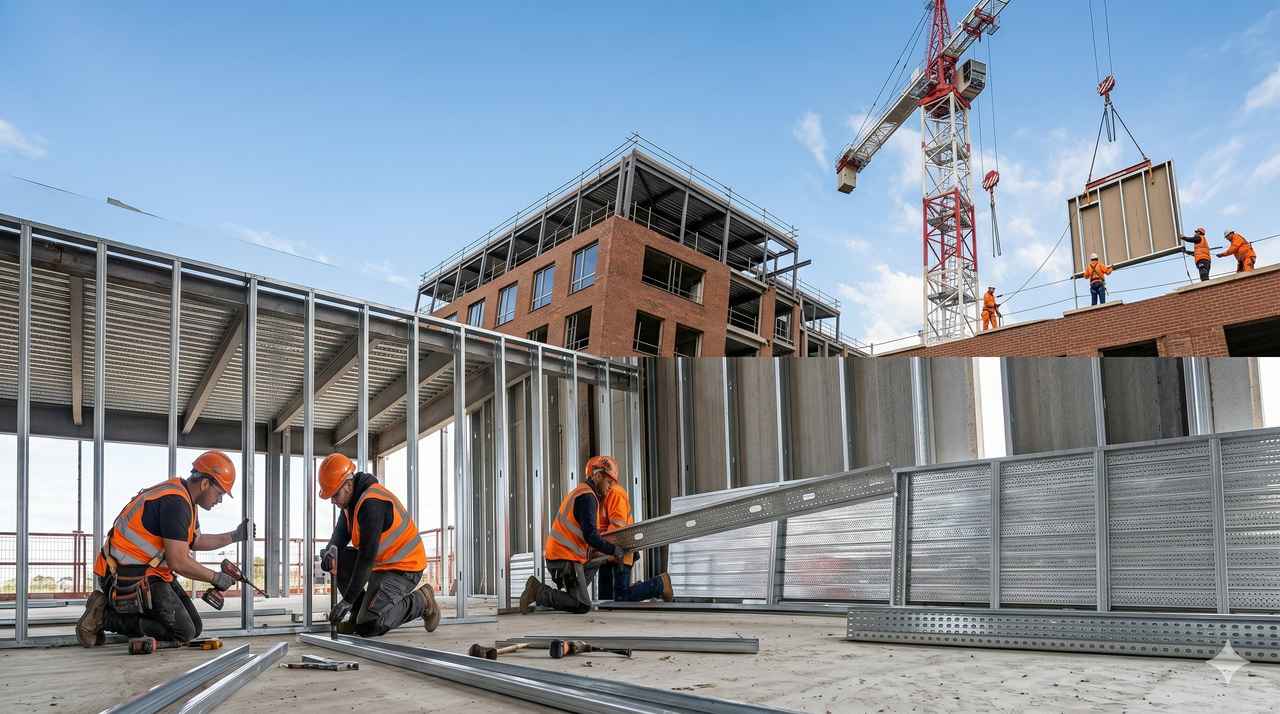
Drylining is a method of finishing internal walls and ceilings by fixing plasterboard to a cold-formed metal-stud frame — or directly to masonry — instead of applying wet plaster. It works by first setting out a lightweight steel framework of C-section studs and U-section tracks, then screw-fixing plasterboard to that frame, and finally taping and jointing the boards to a decoration-ready finish. Because there is no drying-out period, drylining is faster and cleaner than traditional plaster and lets interior spaces be completed while other trades continue around them. Drylining also makes it easy to build insulation, electrical services and pipework into the wall and ceiling void.
What materials are used in drylining?
Modern drylining systems combine cold-formed steel components with plasterboard. The steel elements — typically C-section studs and U-section tracks — are manufactured to British Gypsum and industry specifications, giving a lightweight but structurally capable framework. Plasterboard type varies by application: standard board for internal partitions, moisture-resistant board for bathrooms and kitchens, acoustic board where sound control matters, and fire-rated board for compartmentation walls and ceilings.
Board thickness — usually 12.5 mm, 15 mm, or two layers of 12.5 mm for fire-rated applications — is chosen against the acoustic and fire performance set out in the specification. On commercial projects, acoustic performance is normally tested to Part E of the Building Regulations.
How long does drylining installation take?
Speed is drylining’s principal advantage over wet plaster. A skilled team can board 80–120 m² of wall area per day under typical site conditions. For a standard 2,000 m² commercial fit-out, the boarding phase completes in two to three weeks — far faster than the equivalent plastered finish, which needs extra time for application, drying and key-coat stages.
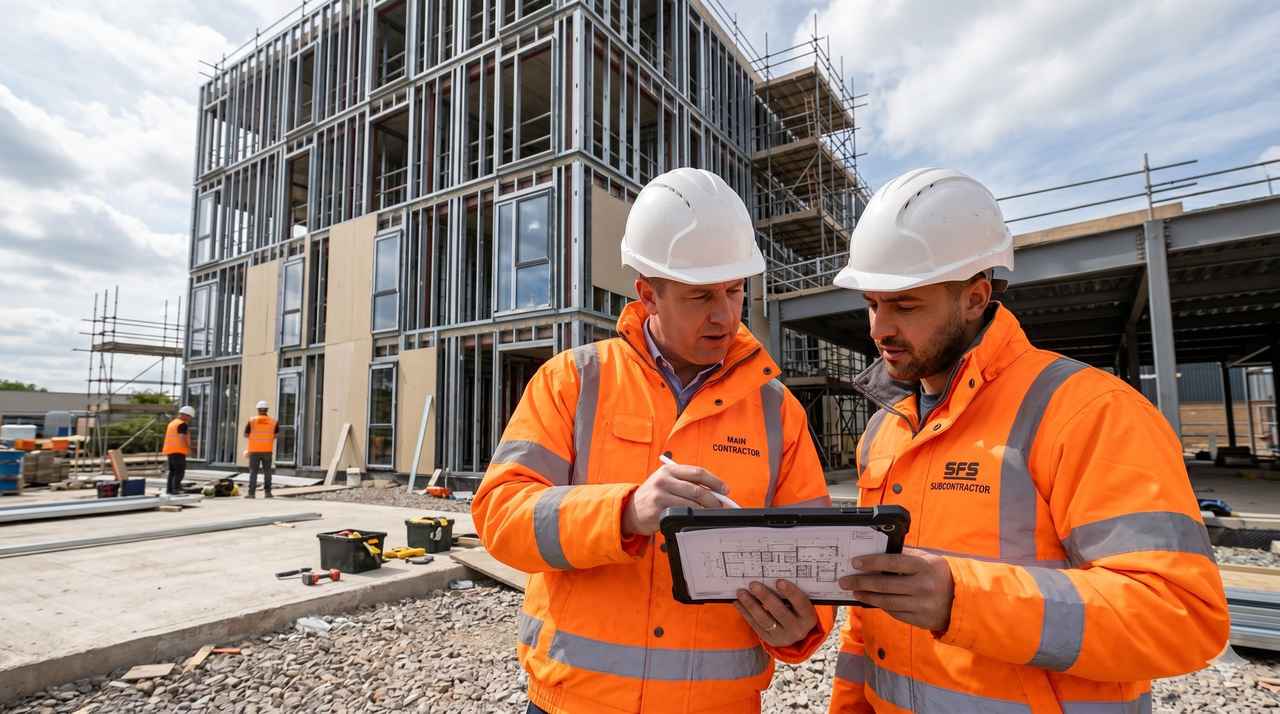
Programme efficiency improves further because drylining runs in parallel with other trades: mechanical and electrical first-fix can proceed as soon as the stud framework is up, rather than waiting for wet plaster to dry. This is why drylining is the default choice on time-critical commercial and residential programmes. See our drylining services for what BAS Frames delivers.
Where is drylining used in UK construction?
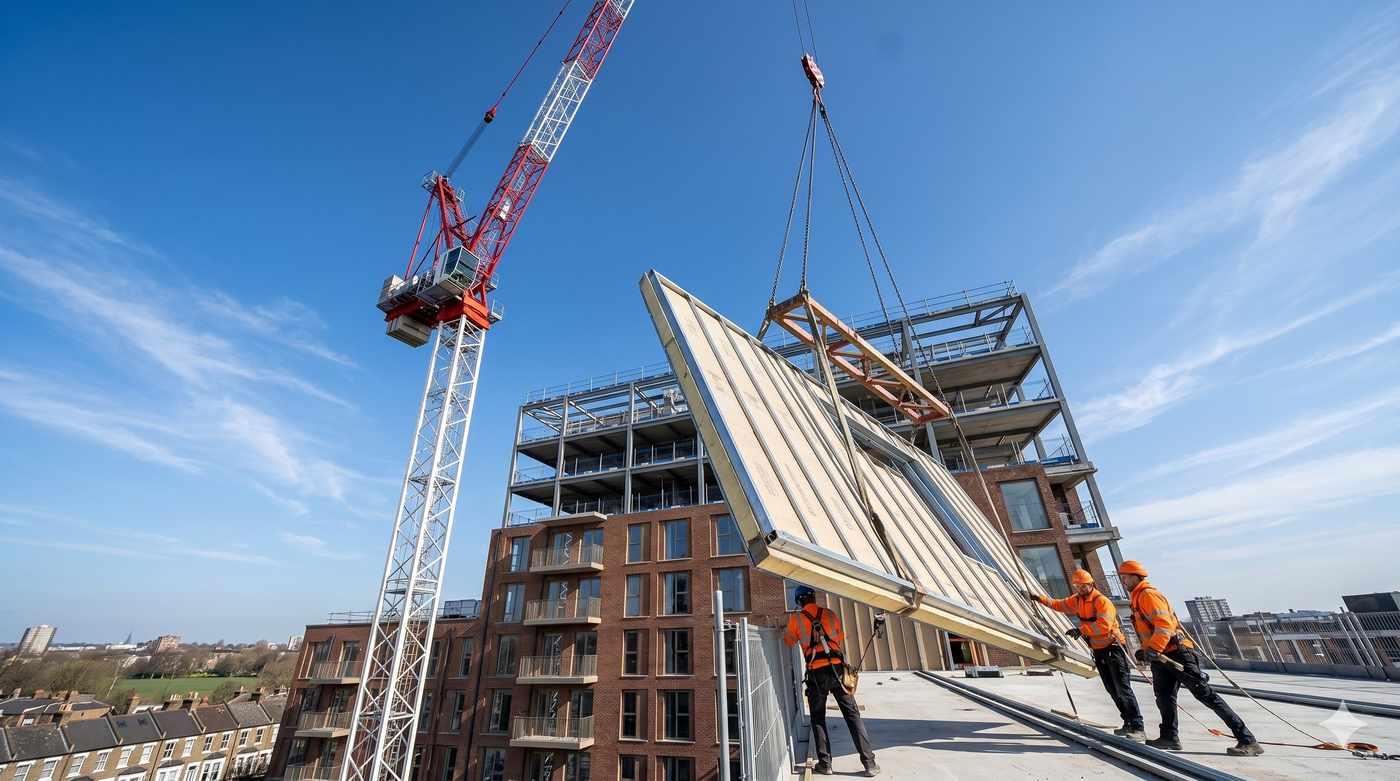
Drylining is used across virtually every building type in the UK — residential, commercial, healthcare, education and hospitality. In new-build residential and Build-to-Rent developments, Steel Frame System infill walls are drylining-finished as standard, combining the structural capability of SFS with the speed and finish quality of plasterboard. In commercial office fit-out, demountable partition systems — a variant of drylining — let layouts be reconfigured without structural alteration.
In higher-risk buildings (18 m+ or 7+ storeys) subject to the Building Safety Act 2022, drylining specifications must be supported by tested-system evidence, with full documentation retained as part of the golden thread. BAS Frames works with main contractors to ensure drylining packages on qualifying buildings are specified, installed and documented to the required standard.
Further reading: British Gypsum Technical Resources | Gypsum Products Development Association
Related: Cost | Infill | Fire | Thermal
Frequently asked questions
What is drylining?
Drylining is a method of finishing internal walls and ceilings using plasterboard fixed to a metal-stud frame or direct to masonry — without wet plaster. It is faster, cleaner and more controllable than traditional wet plaster finishes.
What is drylining used for?
Drylining is used for internal walls, partitions, ceilings and column casings in residential, commercial, healthcare and education buildings. It can achieve fire ratings up to 120 minutes, acoustic ratings above 55 dB Rw, and moisture resistance for wet areas.
How long does drylining take?
A skilled team can install 80–120 m² of walled area per day. The boarding phase of a 2,000 m² commercial fit-out typically takes two to three weeks — significantly faster than wet plaster alternatives.
Is drylining structural?
Standard metal-stud drylining partitions are non-load-bearing. They divide space and provide fire, acoustic and thermal performance but do not carry structural loads. Steel Frame System infill walling is different — it forms part of the building envelope but is not a primary structural element.