Key takeaways
- Indicative 2026 UK figures: the structural steel frame runs about £1,500–£3,000 per m² of floor area (excludes foundations, envelope, M&E and fit-out).
- Cost hinges on scope and access — restricted access can add 10–20% to install labour, and a wide rear-glazing package adds roughly £8,000–£20,000.
- Single-storey, simple extensions often favour masonry on cost; from two storeys, rooftop additions, or anything over ~50 m², steel frame typically wins on total project cost.
- The structural frame goes up in one to three days once foundations are ready — the programme saving, not the frame rate, is where steel pays back.
If you are extending your home and weighing up structural systems, one question shapes every other decision: is a steel frame extension more expensive than brick — and if so, by how much?
The short answer is that the headline supply cost of a steel frame extension is often slightly higher than traditional masonry, but the total project cost is frequently lower once programme, scaffolding, foundation savings and on-site labour are added in. For multi-storey, rooftop or constrained-site extensions, steel framing usually wins on both cost and time.
This guide gives homeowners, self-builders and small developers a realistic 2026 picture of what a steel frame extension costs in the UK, broken down by extension type, what’s included at each price point, and where the cost trade-offs sit against traditional brick-and-block.
For the underlying technical context, our pillar guide on what SFS construction is and how steel framing systems work explains the structural principles that make these costs achievable.
Indicative steel frame extension costs in the UK, 2026
The figures below are typical all-in build costs (structure + envelope + finishes, excluding professional fees, VAT and any major service alterations). They assume standard ground conditions and reasonable site access — both can shift the rate substantially.
Single-storey steel frame extension
- £2,200–£2,800 per m² for a basic specification with standard finishes
- £2,800–£3,800 per m² for a higher specification with bi-fold doors, structural glazing, premium kitchen integration
Two-storey steel frame extension
- £2,000–£2,600 per m² for standard spec (lower per-m² rate because foundations and roof are spread across more floor area)
- £2,600–£3,400 per m² for higher specification
Rooftop steel frame extension
(single-storey addition above existing structure)
- £3,000–£4,500 per m² — the premium reflects access constraints, craneage, structural surveys of the existing building, and waterproofing complexity
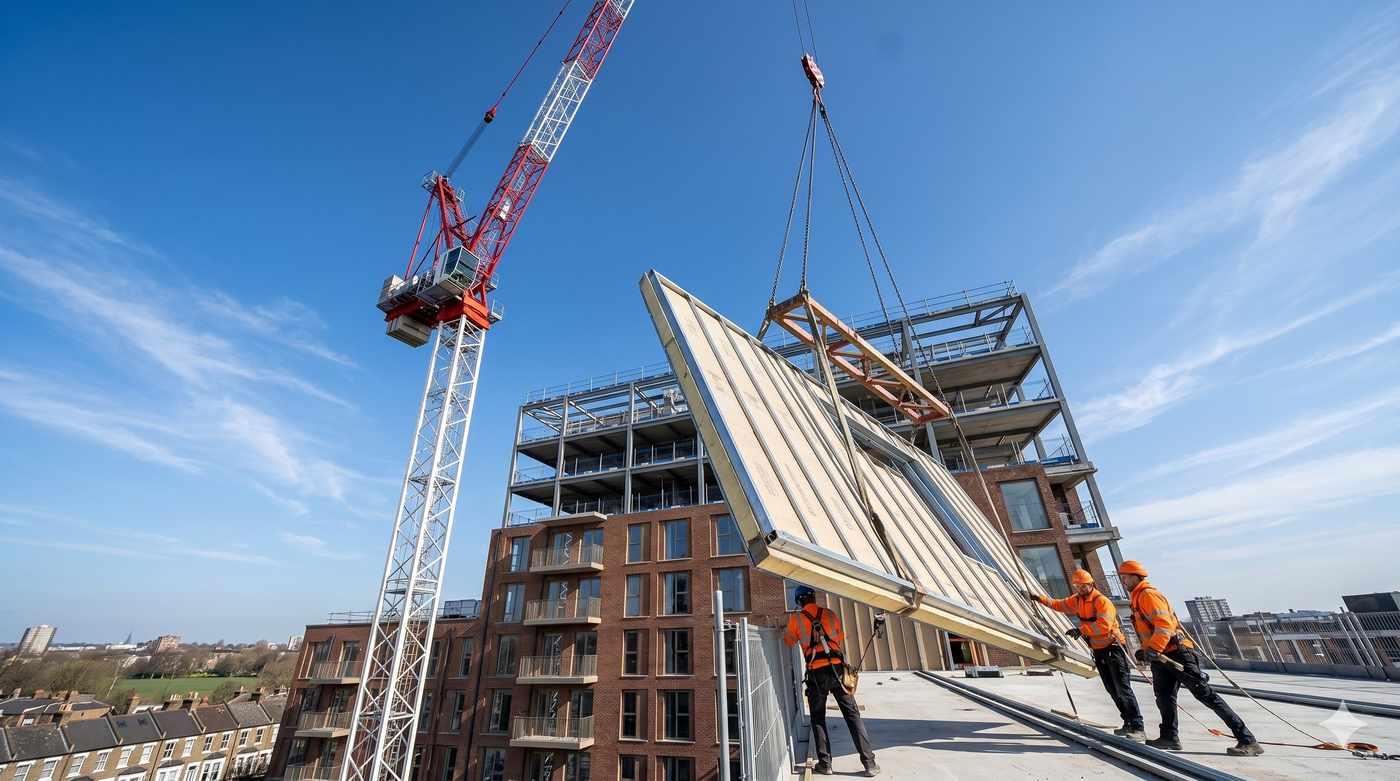
Detailed background on steel frame rooftop extensions is covered in our piece on why developers in dense urban hubs are building upward with steel — the same logic applies to homeowners adding accommodation above existing structures.
How a steel frame extension compares to brick
The cost question that most homeowners actually want answered is: how does steel frame compare with traditional masonry? We have looked at this in detail in our analysis of whether a steel frame extension is more expensive than brick, but here is the headline comparison.
Where steel frame is more expensive than brick
- Raw structural material (the steel sections themselves)
- Engineering and structural design (more upfront design effort)
- Specialist installer rates (vs general bricklaying labour)
Where steel frame is cheaper than brick
- Foundations (lighter structure = smaller foundations, sometimes 25–40% saving)
- Programme (typically 30–50% faster, reducing scaffold hire, prelims, finance costs)
- Scaffolding (less time on hire)
- Weather risk (dry construction means less programme slip)
- Roof loads on existing structures (rooftop extensions impossible in masonry are routine in steel)
The break-even point
For a single-storey ground-floor extension under 30m², brick is often slightly cheaper overall. From two storeys, rooftop, or any extension over 50m², steel frame typically pulls ahead on total project cost.
What’s actually included in the per-m² rate
When a quote says “£2,500 per m²,” what does that actually buy you? In our experience, a competent steel frame extension package on a typical UK home includes:
Structural package
- Structural design and engineering calculations (tied to building regulations submission)
- Cold-formed steel sections, head and base tracks, brackets and fixings, all BS-certified
- Hot-rolled steelwork (RSJs, columns) where the design requires
- Connection design between the new steel frame and the existing structure
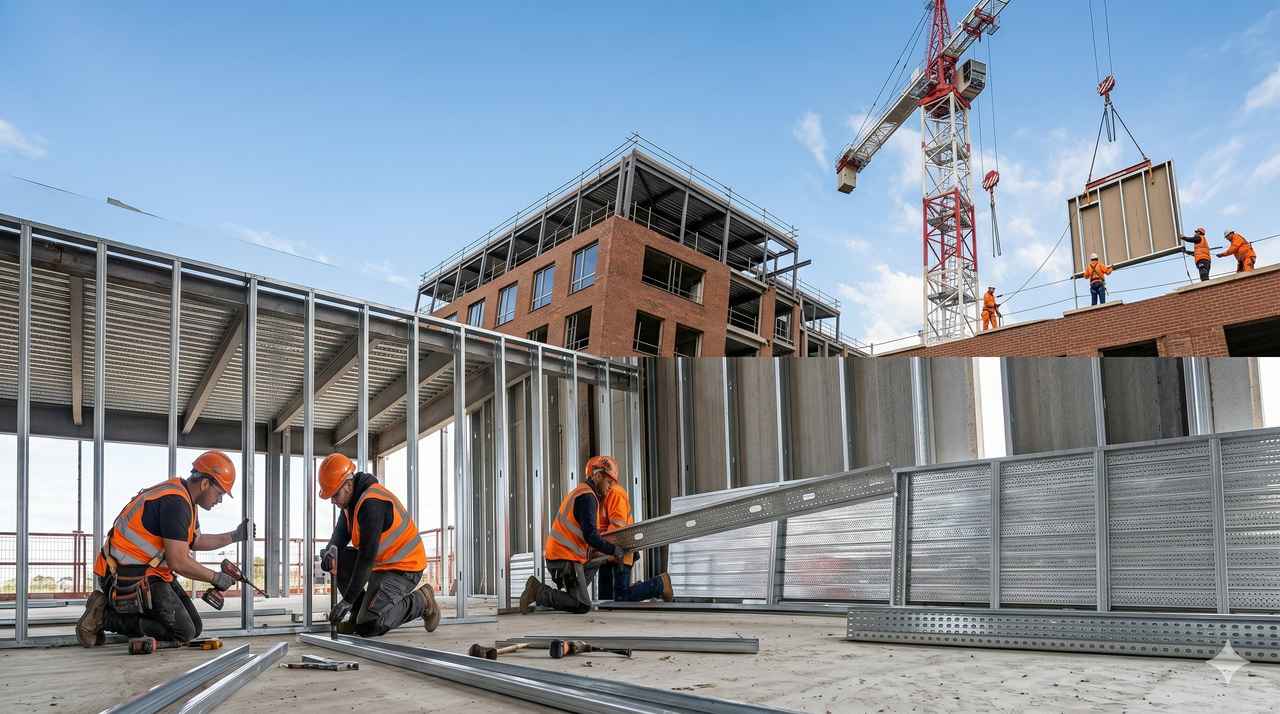
- On-site installation by qualified gangs
Envelope package
- External sheathing board, breather membrane, insulation
- External cladding (brick, render, timber, composite — depending on planning)
- Roof covering, gutters, flashings
- Windows and external doors
Internal package
- Drylining (metal stud partitions and plasterboard linings)
- First-fix electrical and plumbing
- Plastering, painting, flooring
- Kitchens and bathrooms (where included)
For the structural and envelope elements specifically, our steel frame design service and structural engineering services cover the calculations and detailing that sit behind the rate.
What pushes a steel frame extension price up
Site access
A terraced house with no side access requires hand-balling steel through the property. That can add 10–20% to install labour. Detached houses with rear access on driveway are at the lower end of the cost range.
Existing structure condition
Building above or alongside an older property means structural surveys, sometimes underpinning, and bespoke connection details. Pre-1950 properties often need additional allowances.
Glazing and openings
Large bi-fold doors and structural glazing need wind posts or jamb stiffeners in the steel frame. Beautiful, but costly. Budget +£8,000–£20,000 for a wide rear elevation glazing package.
Roof complexity
A simple flat roof is the cheapest. Pitched roofs, dormer additions, or roof terraces with structural waterproofing add cost.
Planning constraints
Conservation areas, listed buildings, and Article 4 zones often require materials that match existing — which can rule out the cheapest cladding options.
Service routing
Moving soil stacks, gas runs or main electrical supplies through the new structure adds first-fix cost.
Programme — and why it matters to total cost
A steel frame extension is typically 30–50% faster on site than equivalent masonry. For a homeowner living through the build (or paying for alternative accommodation), that programme saving has real cash value:
- 6 months of bridging finance on £150,000 = approximately £4,500 in interest at current rates
- 3 months of rented alternative accommodation in London = £6,000–£12,000
- 6 months of scaffolding hire vs 3 months = approximately £2,000 saving
- Fewer weather-affected days in winter builds = reduced programme contingency
These soft savings rarely appear in a tender comparison, but they are real money. A steel frame extension that is £8,000 more expensive on the headline structural cost can deliver a project £15,000 cheaper overall once the programme is factored in.
When NOT to choose steel frame for an extension
Steel framing is not the right answer for every extension. For small single-storey extensions under 25m² in standard suburban gardens, traditional masonry will usually be cheaper and simpler. For listed buildings where like-for-like materials are mandated, steel is usually a non-starter. For ultra-low-budget DIY extensions under £30,000 total, the design and engineering effort makes steel disproportionately expensive.
Steel comes into its own from two storeys upward, on rooftop additions, on constrained urban sites, on extensions with large open-plan spans, and on any project where programme matters.
What to do next
If you are at the early stages of planning a steel frame extension, we recommend three steps:
- Get a feasibility view from a structural engineer. Before any builder quotes, understand whether your existing structure can support the proposed extension. Our structural engineering services cover residential extension feasibility.
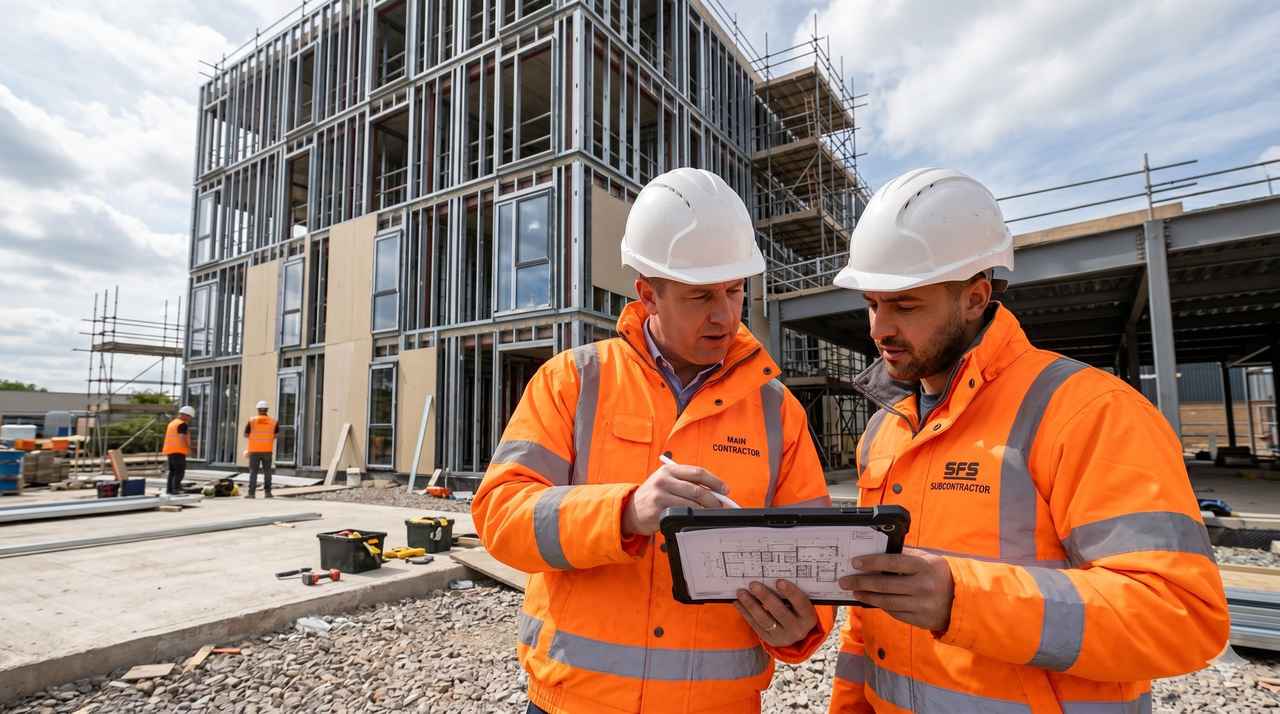
- Get fixed-scope tenders from at least three subcontractors. Make sure each is pricing the same scope — see our SFS cost guide for the scope items most commonly missed.
- Plan for a 10% contingency. Even on well-designed steel frame extensions, hidden conditions in the existing structure show up during install. A budget without contingency is a budget set up to overrun.
For project-specific advice on a steel frame extension you are considering, get in touch with your existing drawings and we will give a feasibility view at no cost.
Related reading
- Is a steel frame extension more expensive than brick? — the cost-vs-speed analysis in detail.
- The sky’s the limit: steel frame rooftop extensions — the case for going up rather than out in dense cities.
- SFS cost per m² UK 2026 — for developers and QSs pricing the structural envelope at scale.
Further reading:Steel Construction Institute | RICS BCIS
Related:Infill | What Is | Fire | Thermal
Frequently asked questions
How much does a steel frame extension cost in the UK?
Steel frame extension costs in the UK typically range from £1,500–£3,000 per m² of floor area for supply and install of the structural frame, depending on complexity, storey height and access. This excludes foundations, envelope, M&E and fit-out. A 30m² single-storey extension frame might cost £25,000–£45,000 for the steel package alone.
Is a steel frame extension more expensive than brick and block?
Steel frame extension packages have a higher supply cost than brick and block per m², but the total project cost is often comparable or lower due to faster construction, reduced foundation requirements (lighter structure means less excavation and concrete), and fewer trades waiting on the structural programme.
Does a steel frame extension need planning permission?
All extensions above a certain size require planning permission regardless of the structural system. Permitted development rights allow extensions up to certain dimensions without full planning consent, but Building Regulations approval is always required. Steel frame extensions are assessed in the same way as any other structural system.
How long does a steel frame extension take to build?
The steel frame for a typical domestic extension can be erected in one to three days once foundations are complete. This compares favourably with brick and block construction, which requires multiple visits for laying, curing and inspection. The overall project programme from groundworks to handover is typically 10–16 weeks for a straightforward extension.