What Is SFS Construction?
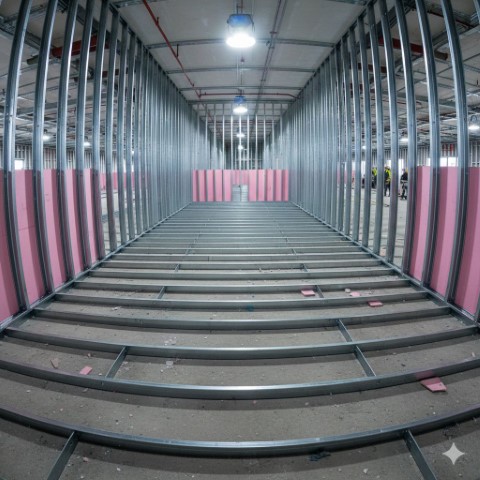
SFS construction is a non-load-bearing, cold-formed steel framing system fixed to a primary structure to support insulation, membranes and external cladding systems.
It is commonly used to:
- Form external wall infill between floors
- Support rainscreen cladding systems
- Deliver controlled thermal and acoustic performance
SFS transfers wind and facade loads to the main structure while enabling precise control of the building envelope.
What Is an SFS Wall System?
An SFS wall system is a complete, engineered external wall solution that combines framing, insulation, membranes, and cladding into a single, coordinated build-up.
What Are the Main Components of an SFS Wall System?
A typical SFS wall system includes:
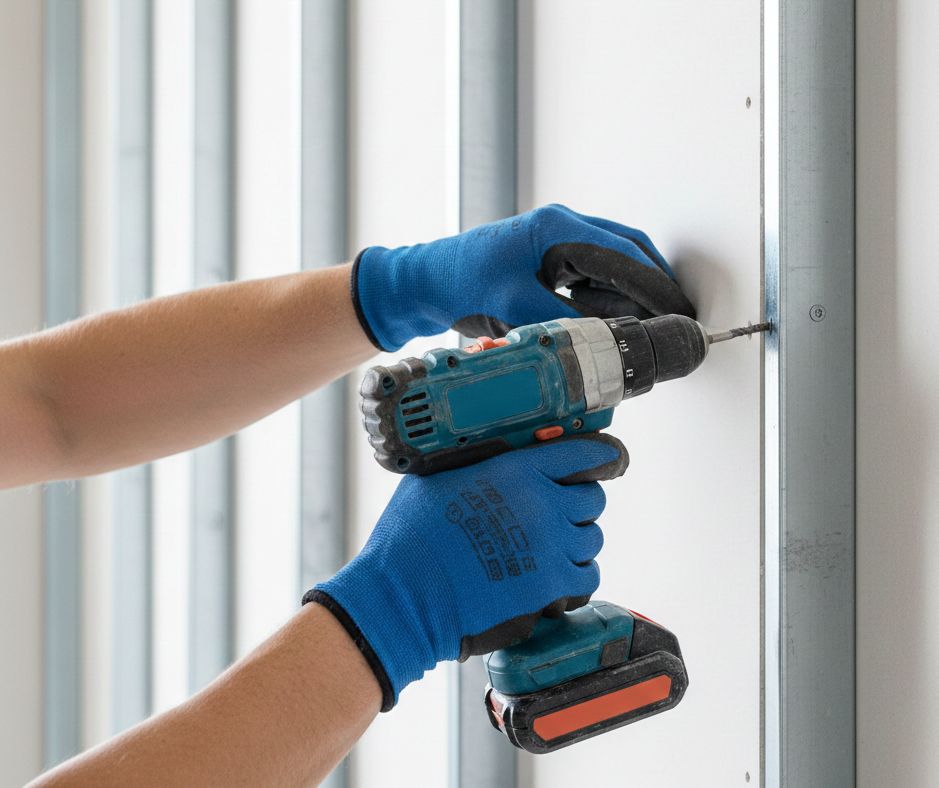
- Cold-formed steel studs and rails
- Thermal insulation (mineral wool or rigid board)
- Air and vapour control layers
- Fire stopping and cavity barriers
- External cladding for steel frame buildings
This systemised approach ensures consistency, compliance and predictable performance across the facade.
How Does SFS Construction Work in Steel Frame Buildings?
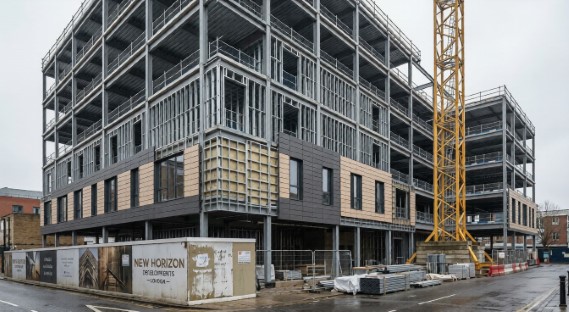
SFS is designed specifically to integrate with steel frame construction, fixing back to the primary steel or concrete structure at calculated centres.
Why Is SFS Used with Steel Frame Construction?
- Accommodates structural movement and deflection
- Maintains facade accuracy across multiple storeys
- Separates the facade system from primary loadbearing elements
This makes SFS ideal for commercial, residential and mixed-use developments.
What Is SFS Infill Framing?
SFS infill framing refers to the installation of steel framing between structural floors or columns to close the building envelope.
Where Is SFS Infill Commonly Used?
- Multi-storey residential developments
- Commercial steel frame buildings
- High-rise and mixed-use projects
SFS infill provides a stable substrate for insulation and cladding while enabling early weather-tightness.
What Cladding Systems Can Be Used with SFS?
SFS supports a wide range of modern facade materials.
Cladding for Steel Frame Buildings Using SFS
Compatible cladding systems include:
- Aluminium and steel rainscreen panels
- Fibre-cement boards
- Terracotta and ceramic facades
- Composite cladding systems
By fixing cladding to the SFS rather than the main frame, designers gain greater flexibility and long-term facade performance.
How Does SFS Construction Improve Thermal Performance?
Thermal efficiency is a key advantage of SFS wall systems.
SFS enables:
- Continuous insulation layers
- Reduced thermal bridging
- Compatibility with high-performance insulation products
This improves overall building energy efficiency.
What U-Values Can Be Achieved with an SFS Wall System?
A well-designed SFS wall system can achieve low U-values that meet or exceed current UK Building Regulations and sustainability targets, contributing to:
- Lower operational energy demand
- Improved EPC ratings
- Enhanced occupant comfort
How Does SFS Construction Improve Acoustic Insulation?
SFS wall systems can be engineered to deliver strong acoustic insulation, particularly in residential and mixed-use developments.
Acoustic performance is achieved through:
- Dense insulation within the SFS cavity
- Decoupled internal linings
- Controlled junction detailing
This reduces airborne sound transmission and improves internal comfort.
How Does an SFS Wall System Work? (Technical Explanation)
An SFS wall system functions as a layered construction:
- The primary structure provides loadbearing support
- SFS studs and rails form the infill frame
- Insulation layers control heat loss and sound transfer
- Air and vapour control layers manage moisture movement
- Cladding systems create the external facade
Each element performs a specific role while working together as a single integrated system.
What Are the Key Advantages of SFS Construction?
- Designed for steel frame construction
- High thermal performance and low U-values
- Flexible cladding support
- Fast, accurate installation
- Strong acoustic insulation capability
- Suitable for complex architectural facades
SFS Construction FAQs
What Is SFS Construction Used For?
SFS construction is used for external wall infill framing and cladding support on steel or concrete frame buildings.
Is SFS Construction Loadbearing?
No. SFS is non-loadbearing and does not support floors or roofs.
What Is the Difference Between SFS and Light Gauge Steel Framing?
SFS is a specific application of light gauge steel framing focused on external wall infill and facade systems.
Is SFS Suitable for High-Rise Buildings?
Yes. SFS is commonly used in mid-rise and high-rise steel frame buildings.
Can SFS Improve Energy Efficiency?
Yes. SFS systems allow continuous insulation and reduced thermal bridging, improving U-values and energy performance.
Is SFS Suitable for Acoustic Performance?
Yes. With appropriate insulation and detailing, SFS wall systems deliver effective acoustic insulation.
Which Cladding Materials Are Compatible with SFS?
Most modern systems, including rainscreen cladding, metal panels, fibre-cement boards and terracotta facades, are compatible with SFS.
Why Specify SFS Construction for Infill Framing and Cladding?
SFS construction offers architects and technical teams a reliable, high-performance solution for infill framing and cladding. Its compatibility with steel frame buildings, combined with strong thermal and acoustic performance, makes it a preferred choice for modern facade design.