The Process of Off-Site Steel Fabrication: From Digital Twin to Physical Reality
At BAS Frames, we believe that the secret to a successful build lies in the precision of the preparation. Off-site steel fabrication is not just about manufacturing; it is a rigorous workflow that transforms architectural vision into engineered reality. By leveraging modular steel systems, we eliminate the unpredictability of traditional construction, delivering prefabricated structures that fit together with millimetre-perfect accuracy.
Here is an inside look at the journey of your steel frame—from the design studio to the delivery truck.
Step 1: Design and Digital Engineering (BIM)
The process begins long before steel is fed into a machine. It starts with data.
Unlike traditional timber or masonry, where adjustments are often made “on the fly” at the site, off-site fabrication requires absolute certainty. We utilise advanced Building Information Modelling (BIM) software to create a “digital twin” of the structure.
During this phase, our design team collaborates with architects and structural engineers to:
-
Rationalise the Design: Converting architectural drawings into manufacturable steel specifications.
-
Clash Detection: Identifying potential conflicts with M&E (mechanical and electrical) services before fabrication begins.
-
Optimise for Efficiency: Designing modular steel systems that maximise structural integrity while minimising material waste.
Step 2: Cold-Forming and Manufacturing
Once the design is locked and the 3D model is approved, the data is sent directly to computer-controlled roll-forming machines.
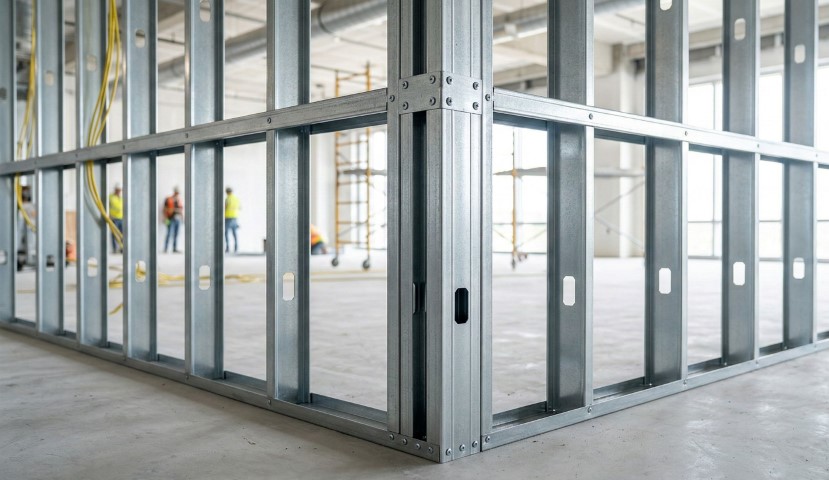
This is the heart of Light Gauge Steel (LGS) technology. High-quality, galvanised steel coils are fed into the machinery, which cold-rolls the steel into C-sections and U-sections (studs and tracks).
-
Precision Engineering: The machine punches service holes, marks screw locations with dimples, and automatically cuts steel to exact lengths.
-
Traceability: Each piece of steel is inkjet-printed with a unique ID code, ensuring full traceability and easy identification for the assembly team.
-
Zero Waste: Because the machine cuts to the exact design length, material waste is virtually eliminated compared to cutting timber or steel beams on-site.
Step 3: Off-Site Assembly (Prefabrication)
For projects utilising our Panellised System, the individual steel components move to the assembly benches within the factory. This is where the concept of prefabricated structures comes to life.
Skilled technicians assemble the loose profiles into panels (walls), cassettes (floors), or trusses (roofs).
-
Jigged Accuracy: Components are placed into jigs to ensure every panel is perfectly square and dimensionally accurate.
-
Integration: At this stage, other elements can be integrated, such as bracing straps, lintels, and external sheathing boards (e.g., CP boards), further reducing on-site work.
-
Quality Control: In a factory environment, every weld, screw, and connection is inspected against BS standards, without interference from rain, wind, or poor lighting.
Step 4: Logistics and “Just-in-Time” Delivery
One of the biggest challenges in UK construction—especially in dense urban areas like London or Manchester—is storage. Modular steel systems solve this through smart logistics.
Once fabricated, the panels are stacked, bundled, and labelled according to the installation sequence. They are not shipped all at once to clutter the site; they are delivered on a “Just-in-Time” basis.
-
Sequential Loading: The items needed first (e.g., ground floor walls) are loaded last, so they come off the truck ready for immediate lifting.
-
Transport Efficiency: Because LGS is lightweight, we can transport more structure per truckload compared to precast concrete, reducing the project’s carbon footprint.
Step 5: Rapid On-Site Installation
The final step is the assembly at the project site. Because the fabrication process was handled off-site, the “construction” phase becomes an “assembly” phase.
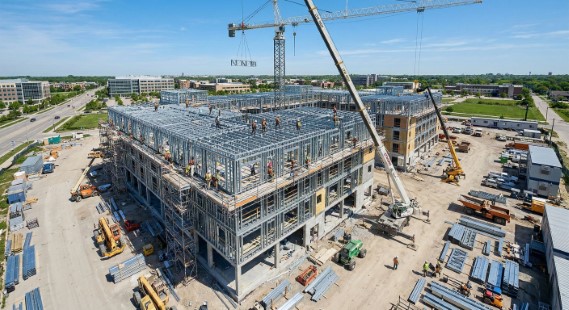
Using the unique ID codes printed on the frames, our SMAS and CHAS-accredited installation teams can erect the structure with incredible speed. There is no cutting, no measuring, and no waste to clear up. The prefabricated panels are simply craned into position and fixed down, often closing the building envelope in weeks rather than months.
Why The Process Matters
Understanding the off-site fabrication process highlights why BAS Frames is the partner of choice for complex builds. By moving the complexity into the factory, we de-risk the site.
Whether you are looking for a Full Build (Panellised) solution or a precision Infill System, the result is the same: a structure that is straighter, stronger, and built faster.