By Basframes.co.uk | Your UK Specialists in Steel Frame Solutions
Steel frame buildings have become the backbone of modern UK construction — from agricultural barns and industrial warehouses to commercial units and sports facilities. Whether you’re a developer, business owner, or self-builder, understanding how steel frame structures are designed and built can save you time, money, and costly mistakes.
At Basframes.co.uk, we’ve helped hundreds of clients across the UK bring their steel frame projects to life. This ultimate guide walks you through everything you need to know — from structural design principles to construction timelines and planning considerations.
What Is a Steel Frame Building?
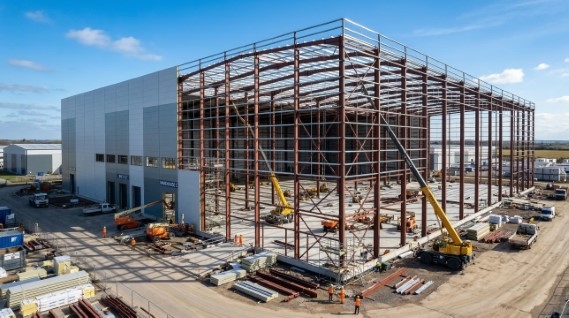
A steel frame building is a structure where the primary load-bearing skeleton is made from structural steel sections — typically hot-rolled steel columns, beams, and rafters. These components are engineered and fabricated off-site before being assembled on your plot.
Steel frames are used across a wide range of applications, including:
- Agricultural buildings — hay stores, livestock housing, machinery stores
- Industrial units — workshops, distribution centres, manufacturing facilities
- Commercial buildings — retail units, offices, car showrooms
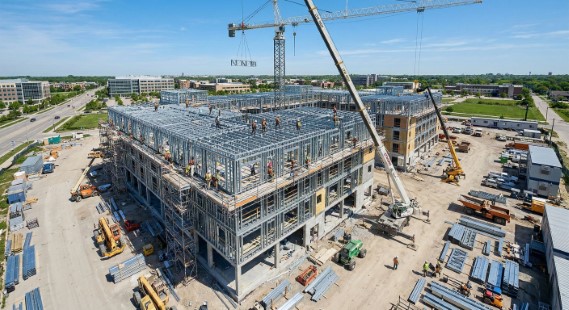
- Steel framed houses — residential homes and apartments up to 8 storeys
- Leisure facilities — sports halls, community centres
Why Choose Steel Frame Construction?
Steel frame construction offers a compelling combination of strength, speed, and value. Here’s why it continues to dominate the UK construction industry.
Strength and Durability Structural steel has one of the highest strength-to-weight ratios of any construction material. A steel frame building can withstand high wind loads, heavy snow loads, and seismic activity — all while using less material than a concrete equivalent.
Speed of Construction. Because the main frame components are fabricated in a factory and delivered ready to erect, steel frame buildings go up significantly faster than traditional masonry structures. Our supply and installation service ensures components arrive on site pre-drilled and labelled for fast, accurate assembly.
Design Flexibility Steel allows for large, clear-span interior spaces with no intermediate columns — ideal for warehouses, sports halls, and agricultural buildings where open floor plans are essential. Our standalone steel frame system takes this further, offering full design flexibility for multi-storey housing and commercial developments up to eight storeys.
Cost Efficiency Lower labour costs, faster build times, and minimal site waste make steel frame construction extremely cost-competitive, particularly for commercial and industrial projects.
Sustainability Steel is one of the most recycled materials in the world. Modern steel frame buildings can be disassembled, relocated, or repurposed — making them an environmentally responsible choice.
Key Elements of Steel Frame Structural Design
Understanding the structural design process helps you make better decisions throughout your project. Our dedicated design team collaborates with structural engineers at every stage to produce precise, buildable drawings tailored to your project.
1. Portal Frame Design
The most common structural system for single-storey steel buildings in the UK is the portal frame. This consists of vertical columns connected to pitched rafters via moment-resisting connections (the “eaves” and “apex”). Portal frames are efficient, cost-effective, and versatile — and are a speciality of our commercial steel frame solutions.
2. Loads and Calculations
Your structural engineer will calculate the building’s ability to resist:
- Dead loads — the permanent weight of the structure itself
- Live loads — people, equipment, and stored goods
- Wind loads — lateral and uplift forces based on your site’s exposure category
- Snow loads — particularly relevant in elevated or northern UK locations
All UK steel frame designs must comply with BS EN 1993 (Eurocode 3) — the European standard for structural steel design.
3. Column and Rafter Sizing
The size of your steel sections depends on the span, bay spacing, roof pitch, loading conditions, and cladding system. Wider spans and heavier loads require deeper, heavier sections.
4. Base Plate and Foundation Design
Your steel columns transfer loads to the ground via base plates and anchor bolts set into reinforced concrete pads. The foundation design depends on ground bearing capacity, frost depth, and the magnitude of the loads involved.
5. Bracing Systems
Longitudinal stability is achieved through wind bracing — typically diagonal steel flats or hollow sections in the roof and walls. This prevents the building from racking under lateral wind forces.
The Steel Frame Building Design Process
Here’s a step-by-step overview of how a typical project progresses with Basframes. You can also explore our full range of services to learn more about each phase.
Step 1 — Initial Consultation We discuss your requirements: building use, dimensions, location, cladding preferences, access doors, windows, and budget. We’ll also advise on planning considerations early on.
Step 2 — Preliminary Design and Quote Our design team produces a preliminary structural scheme and detailed quotation. You’ll receive a clear breakdown of the frame, cladding, guttering, and any extras — including a 3D steel fabrication drawing before any fabrication work begins.
Step 3 — Planning Permission Most steel frame buildings over a certain size require planning permission. Agricultural buildings may qualify for Permitted Development Rights, but commercial and industrial structures almost always need a full application. We can advise and assist throughout.
Step 4 — Structural Engineering and Building Regulations Once planning is approved, full structural calculations are produced and submitted to your local authority’s Building Control team. This ensures your building meets all safety and performance standards.
Step 5 — Fabrication and Supply: Your steel frame is fabricated in our workshop, shot-blasted, and primed. All connections are pre-drilled, and components are clearly labelled. Learn more about our supply process, including mobile welding and crane or HIAB hire solutions available on site.
Step 6 — Installation Our experienced installation teams are SMAS and SSIP accredited and arrive on site fully equipped. We have a dedicated Health & Safety Manager who visits all sites weekly, ensuring every project is delivered safely, efficiently, and on programme.
Our Work: Projects Across the UK
We’re proud of the diverse range of projects we’ve delivered for clients across the UK — from multi-storey commercial buildings and residential developments to industrial and educational facilities. Browse our completed projects and ongoing projects to see the quality and breadth of our work first-hand.
Steel Frame Solutions We Offer
Infill Steel Frame Systems
Our infill walling systems fill the space between a building’s structural frame and floors. Lightweight, durable, and non-load-bearing, these walls support cladding, brickwork, and other external finishes while withstanding wind loads — ideal for modern commercial and residential construction.
Standalone Steel Frame Systems
Our standalone system provides comprehensive structural solutions using lightweight steel sections, offering full design flexibility for housing and apartments up to eight storeys. It supports floating floor chipboard slabs or Lewis deck floors with screed finish for efficient, solid results.
Steel Framed Houses
Our steel framed house solutions are built using pre-designed, prefabricated systems that combine rapid construction, economic efficiency, and outstanding insulation values. Steel framed homes are quicker to build, produce less waste, and offer an eco-friendly alternative to concrete and timber frames.
Commercial Steel Frame Buildings
From portal frame industrial units to multi-storey office buildings, our commercial steel frame solutions deliver the large, clear-span spaces that modern businesses demand. Steel portal frames are fully customised for every project, taking into account spans, heights, and site-specific wind loads.
Cladding Options for Steel Frame Buildings
The steel frame is just the skeleton — the cladding system determines the building’s thermal performance, appearance, and weather resistance.
Box Profile Steel Cladding: The most cost-effective option, widely used for agricultural and industrial buildings. Available in a range of colours.
Insulated Composite Panels (Kingspan / Trisomet) Pre-insulated sandwich panels offer excellent thermal performance and a clean, modern finish. Ideal for heated workshops, commercial units, and food production facilities.
Standing Seam Roofing A premium, concealed-fix roofing system offering a sleek architectural appearance and outstanding weather tightness. Popular for prestigious commercial and leisure buildings.
Brick or Blockwork Infill. Many clients choose to combine a steel frame with traditional brick or blockwork at the low level — a common specification in our infill steel frame projects.
How Much Does a Steel Frame Building Cost?
Costs vary depending on size, specification, location, and site conditions. As a rough guide for the UK market:
| Building Type | Approximate Cost per m² (supply & erect, ex. foundations) |
|---|---|
| Basic agricultural portal frame | £80 – £130 |
| Industrial/commercial (clad) | £130 – £250 |
| Insulated commercial unit | £200 – £400+ |
These figures are indicative only. For an accurate quotation tailored to your project, contact the Basframes team directly.
Planning and Building Regulations: What You Need to Know
Planning Permission: Any permanent steel frame building will likely require planning permission unless it qualifies under Permitted Development. Key factors include size, use class, proximity to boundaries, and whether the land is in a designated area (Green Belt, AONB, Conservation Area).
Building Regulations Building Regulations approval is required for most steel frame buildings, ensuring the structure is safe, energy efficient, and fit for purpose. Our services team can connect you with approved structural engineers and building control inspectors.
Agricultural Buildings Agricultural buildings under 1,000m² on holdings over 5 hectares may qualify for Prior Approval rather than full planning permission — a faster and cheaper route. Ask us whether your project qualifies.
Why Choose Basframes for Your Steel Frame Building?
At Basframes.co.uk, we offer a complete design, supply, and installation service for clients across the UK. Here’s what sets us apart:
- In-house design and engineering support — collaborative, precise, and buildable drawings for every project
- Competitive, transparent pricing — no hidden costs, no surprises
- High-quality fabrication with full material traceability and BS-certified components
- Accredited installation teams — SMAS, SSIP, and SMSTS certified, with dedicated H&S management on every site
- A proven track record — see our completed projects across commercial, residential, and industrial sectors
Get a Free Quote Today
Ready to start your steel frame building project? Contact the Basframes team for a free, no-obligation quotation.
📞 Call us: 07463 631303 📧 Email us: office@basframes.co.uk Visit: www.basframes.co.uk
Basframes.co.uk — Expert Steel Frame Buildings Across the UK