Key takeaways
- Drylining creates smooth internal walls and ceilings by fixing plasterboard to a frame instead of wet plastering — faster, cleaner and with no drying-out delay.
- The difference from traditional plaster is mainly speed and mess: boards go up dry and are ready to decorate far sooner, with services run in the wall void.
- Different systems suit different needs — standard, moisture-resistant, fire-rated and acoustic boards on metal or timber frames.
- For property owners it is typically quick and cost-effective, suitable for new builds and refurbishments; cost depends on board specification, area and access.
Drylining is a fast, efficient, and cost-effective method of creating smooth internal walls and ceilings without the mess, drying time, and labour intensity of traditional wet plastering. At BAS Frames, we specialise in professional drylining services for residential, commercial, and industrial clients, delivering precision finishes that meet the highest building standards.
In this comprehensive guide, we’ll explain everything you need to know about drylining—from how it works and its key benefits to when you should use it and what to expect from the installation process.
What Is Drylining?
Drylining is the process of lining internal walls and ceilings with plasterboard (also known as drywall or gypsum board) rather than applying traditional wet plaster. The boards are typically fixed to either:
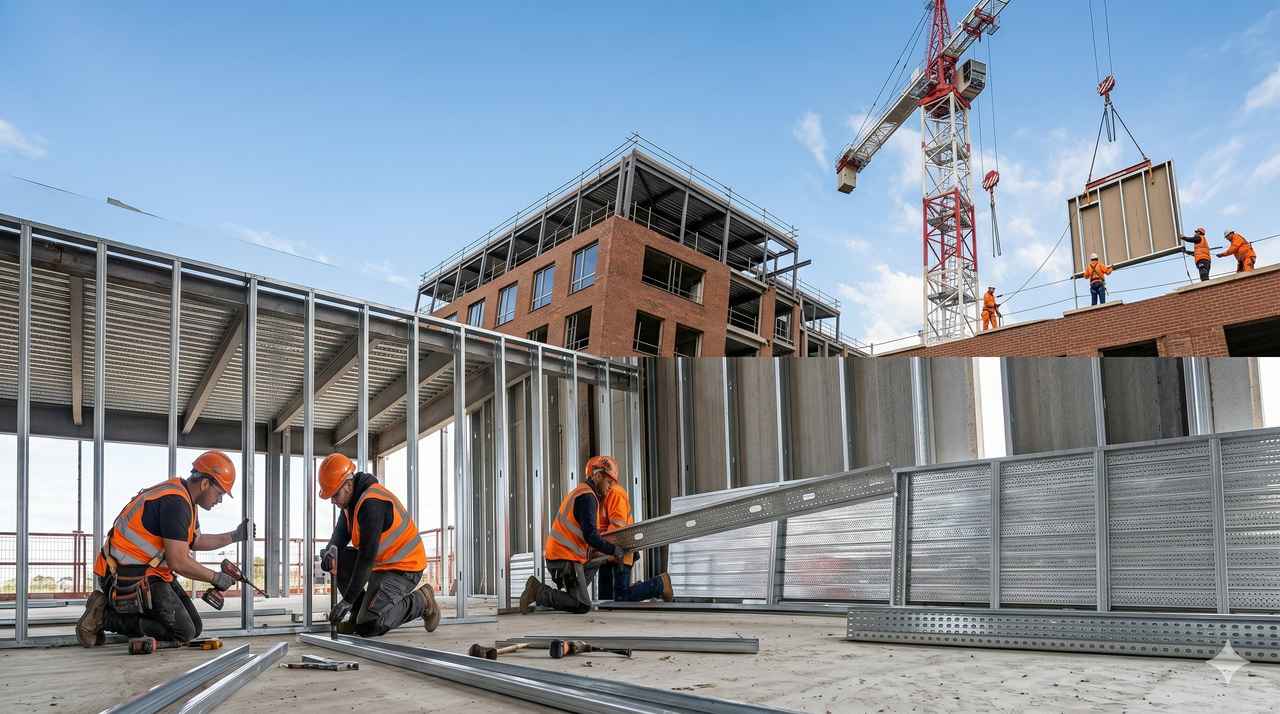
- Metal stud frameworks for partition walls
- Existing masonry walls using adhesive (dot and dab method) or battens
- Ceiling joists to create smooth overhead surfaces
Once the plasterboard is in place, joints between boards are either taped and filled for a seamless finish or covered with a thin skim coat of plaster. The result is a smooth, flat surface that’s ready for painting or decorating within 24-48 hours—far quicker than traditional plastering.
Modern drylining has evolved to include specialist boards designed for specific purposes, including fire resistance, moisture resistance, acoustic insulation, and thermal performance. This makes it incredibly versatile for different building types and regulatory requirements.
How Does Drylining Differ from Traditional Plastering?
The key difference lies in the method and materials:
Traditional Wet Plastering:
- Involves applying multiple coats of wet plaster directly to masonry walls
- Requires skilled plasterers and significant drying time between coats
- Can take several days to fully dry and cure
- Produces more mess and requires careful site protection
Drylining:
- Uses pre-manufactured plasterboard sheets fixed to frameworks or walls
- Faster installation with minimal drying time
- Cleaner process with less dust and waste
- Allows integration of insulation, soundproofing, and services (electrical, plumbing)
- More cost-effective for large-scale projects
While traditional plastering still has its place—particularly in period properties and heritage buildings—drylining has become the standard for new builds, commercial fit-outs, and modern renovations due to its speed, efficiency, and versatility.
Key Benefits of Drylining
1. Speed and Efficiency
Drylining is significantly faster than wet plastering. Large areas can be boarded in a single day, and after taping and jointing (or skimming), surfaces are ready for decoration within 24-48 hours. This rapid turnaround reduces project timelines and allows trades to move on to subsequent tasks more quickly.
2. Cost-Effectiveness
The streamlined installation process means lower labour costs and reduced project duration. Material costs are also competitive, especially for large-scale projects where bulk purchasing and efficient installation methods drive down overall expenses.
3. Enhanced Thermal Performance
Drylining systems create a cavity between the plasterboard and the structural wall, allowing for the installation of insulation materials. This improves the building’s thermal efficiency, reduces heat loss, and helps meet modern energy performance standards. For properties looking to improve their Energy Performance Certificate (EPC) rating, drylining with proper insulation is an effective solution.
4. Improved Fire Safety
Specialist fire-rated plasterboard is available to meet stringent fire safety regulations, particularly important in commercial buildings, apartments, and properties requiring compartmentation. These boards are designed to resist fire for specific periods (typically 30, 60, or 90 minutes), providing crucial time for evacuation and fire suppression.
At BAS Frames, we specialise in fire-rated drylining systems that comply with UK Building Regulations and provide the necessary protection for your property.
5. Excellent Acoustic Insulation
Noise control is essential in multi-occupancy buildings, offices, hotels, and even residential homes. Acoustic drylining systems use specialist boards and insulation materials to significantly reduce sound transmission between rooms. This creates quieter, more comfortable living and working environments.
6. Moisture Resistance
For bathrooms, kitchens, and other moisture-prone areas, moisture-resistant (MR) plasterboard provides protection against humidity and water damage. These boards prevent mould growth and maintain structural integrity in damp environments.
7. Clean and Precise Finish
When professionally installed, drylining provides perfectly flat, smooth surfaces ideal for painting, wallpapering, or tiling. Modern taping and jointing techniques create seamless transitions between boards, while skilled skimming delivers a flawless finish indistinguishable from traditional plastering.
Common Drylining Applications
Residential Properties
- New build homes and housing developments
- House extensions and loft conversions
- Basement conversions and underground spaces
- Garage conversions into habitable rooms
- Internal wall insulation upgrades
Commercial Buildings
- Office fit-outs and partitioning
- Retail units and shopping centres
- Hotels and hospitality venues
- Schools, colleges, and educational facilities
- Healthcare buildings and hospitals
Industrial and Warehouse Spaces
- Creating office areas within warehouses
- Temperature-controlled storage facilities
- Industrial unit partitioning
Our team at BAS Frames works across all these sectors, delivering tailored drylining solutions that meet specific project requirements, budgets, and timelines.
The Drylining Installation Process
Understanding the installation process helps property owners know what to expect:
Step 1: Site Assessment and Planning
Our specialists assess the site, take measurements, and determine the most appropriate drylining system based on the building type, intended use, and performance requirements (thermal, acoustic, fire rating).
Step 2: Framework Installation
For metal stud partition walls, we install a metal framework to the required height and configuration. For drylining existing walls, we prepare surfaces and mark fixing points for adhesive or battens.
Step 3: Insulation Installation
Where required, thermal or acoustic insulation is fitted within the cavity between the framework and the structural wall or between stud partitions.
Step 4: Plasterboard Fixing
Plasterboard sheets are cut to size and fixed to the metal studs using screws, or to masonry walls using adhesive (dot and dab method). Specialist boards (fire-rated, moisture-resistant, acoustic) are used where specified.
Step 5: Jointing and Finishing
Joints between boards are treated using one of two methods:
- Tape and Jointing: Joint tape and filler compound are applied to create seamless transitions between boards. Multiple coats are sanded smooth for a paint-ready finish.
- Skimming: A thin coat of wet plaster is applied over the entire boarded surface for a traditional plastered appearance.
Both methods deliver excellent results; the choice depends on project requirements, budget, and timeline.
Types of Drylining Systems
Standard Drylining
General-purpose plasterboard suitable for most internal walls and ceilings in dry environments.
Fire-Rated Drylining
Specialist boards containing fire-resistant cores that meet building regulations for compartmentation and fire barriers. Essential for escape routes, party walls in apartments, and commercial buildings.
Acoustic Drylining
High-density boards combined with acoustic insulation materials that reduce noise transmission. Ideal for apartments, hotels, offices, and recording studios.
Moisture-Resistant Drylining
Water-resistant boards with treated cores designed for bathrooms, kitchens, utility rooms, and wet rooms. Prevents moisture damage and mould growth.
Thermal Drylining
Insulated plasterboard with bonded thermal insulation backing, providing both lining and insulation in a single product. Excellent for improving energy efficiency in solid-wall properties.
When Should You Choose Drylining?
Drylining is the ideal choice when:
- You need a fast turnaround on your project
- Budget efficiency is important
- Thermal insulation or soundproofing is required
- Fire safety compliance is essential
- You’re creating new partition walls
- The project involves commercial fit-out or office reconfiguration
- You want minimal disruption and mess
However, traditional plastering may be preferable for:
- Listed buildings and period properties requiring traditional finishes
- Small repair work and patching
- Properties where maintaining original character is essential
Our team can advise on the best approach for your specific project, balancing practical requirements with aesthetic preferences and regulatory compliance.
Drylining Cost Considerations
The cost of drylining varies based on several factors:
- Project size: Larger areas benefit from economies of scale
- Board type: Specialist boards (fire-rated, acoustic) cost more than standard plasterboard
- Finish method: Tape and jointing is typically more cost-effective than full skimming
- Installation complexity: High ceilings, difficult access, or intricate layouts increase labour costs
- Insulation requirements: Adding thermal or acoustic insulation affects material and labour costs
As a general guide, drylining is usually 20-30% more cost-effective than traditional plastering for new builds and large renovations, particularly when project timelines are considered. The faster installation reduces overall construction costs by allowing other trades to commence work sooner.
For an accurate quote tailored to your project, contact BAS Frames for a free consultation and detailed estimate.
Why Choose BAS Frames for Your Drylining Project?
At BAS Frames, we bring extensive experience and technical expertise to every drylining project:
- Skilled specialists: Our team is fully trained in modern drylining techniques and safety standards
- Quality materials: We use premium plasterboard and components from trusted manufacturers
- Regulatory compliance: All installations meet UK Building Regulations and industry standards
- Versatile expertise: From residential renovations to large-scale commercial fit-outs, we deliver across all sectors
- Reliable project management: Clear communication, accurate timelines, and professional service throughout
- Competitive pricing: Fair, transparent quotes with no hidden costs
Whether you’re building a new home, renovating an office, or creating partitions in a commercial space, we provide drylining solutions that combine speed, quality, and value.
We also specialise in design, supply, and installation of steel frame systems, offering comprehensive construction solutions from concept to completion.
Final Thoughts
Drylining has transformed modern construction, offering a fast, efficient, and versatile alternative to traditional plastering. Its ability to incorporate insulation, soundproofing, and fire protection makes it ideal for contemporary building projects across residential, commercial, and industrial sectors.
Whether you’re a homeowner planning a renovation, a developer managing a new build, or a business requiring commercial fit-out, understanding drylining helps you make informed decisions that balance quality, performance, and budget.
If you’re considering drylining for your next project, our team at BAS Frames is here to help. From initial consultation to final finishing, we deliver professional drylining services that meet your specific requirements and exceed expectations.
Ready to get started?
Contact BAS Frames today for a free consultation and quote. Call us on 07463 631303 or email office@basframes.co.uk to discuss your drylining needs.
Further reading:British Gypsum Technical Resources | Gypsum Products Development Association
Related:Cost | Infill | Fire | Thermal
Frequently asked questions
What is the difference between drylining and plastering?
Drylining uses plasterboard fixed to a metal frame or masonry without wet plaster — it is faster and dry from day one. Traditional plastering applies wet material to walls that must cure before decoration. Drylining is the standard approach for new-build construction; plastering is more common in renovation.
How much does drylining cost per m²?
Drylining costs in the UK typically range from £20–£45 per m² for supply and fix, depending on board specification, fire rating, acoustic performance and access conditions. Fire-rated or acoustic systems with multiple board layers cost more than single-layer standard partitions.
Can drylining be used in bathrooms?
Yes — moisture-resistant plasterboard (green board or Aquapanel) is specified for wet areas. For shower enclosures and areas with direct water contact, a tile-backer board such as Aquapanel or Hardiebacker is required rather than standard moisture-resistant plasterboard.
Does drylining require planning permission?
Internal drylining and partition installation does not normally require planning permission. However, fire-rated partitions in higher-risk buildings (18m+) must be documented as part of the golden thread under the Building Safety Act 2022, and any change to a fire-rated element requires notification to the principal designer.